Pyramid Model: New to Sparkler
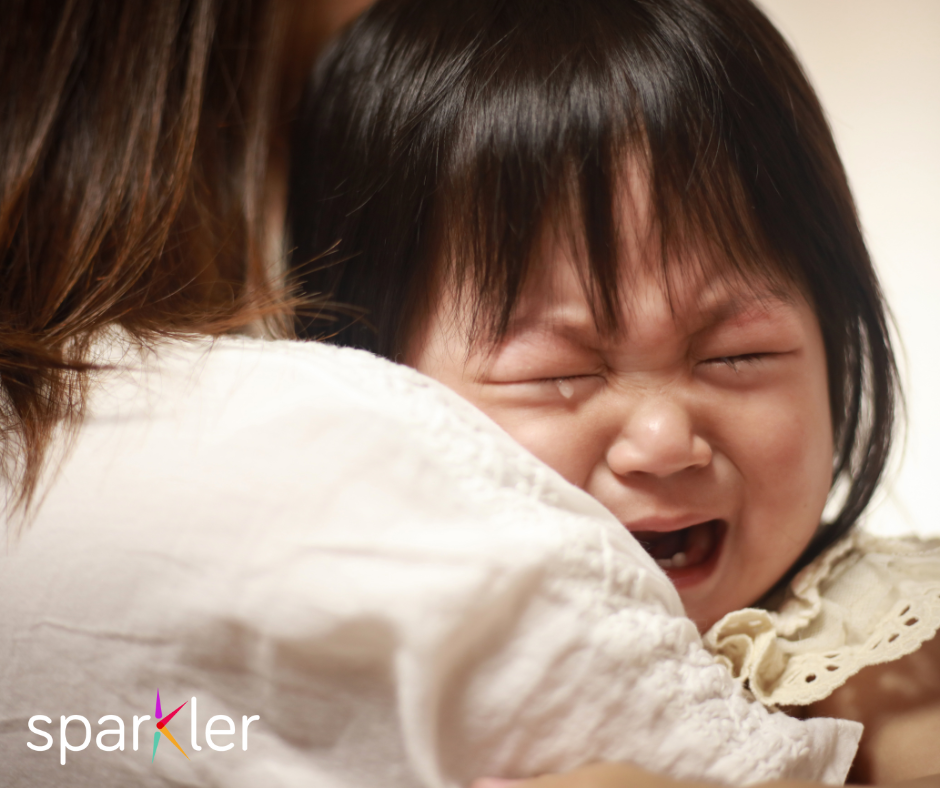


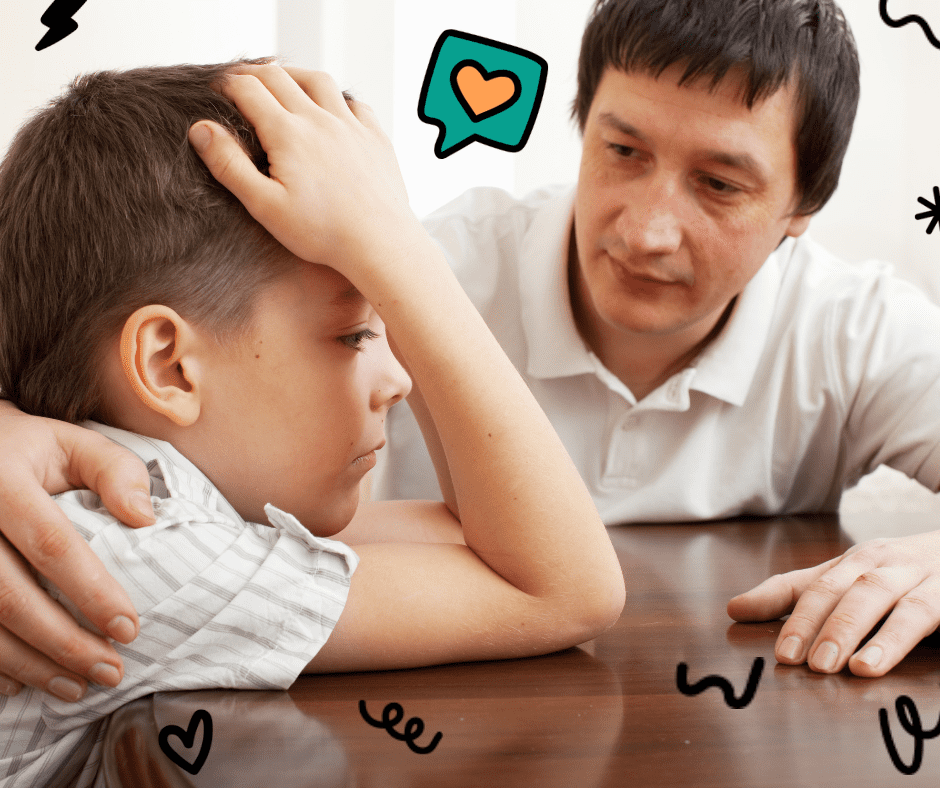
Last year, I worked with a six-year-old child struggling to pay attention in school and having difficulty making friends. Like many kids across the United States and the world, he had been in and out of school and had only inconsistently interacted with peers because of the pandemic. The inconsistency of his life and school experience was making him feel sad, lonely, and insecure. One bit of consistency in this child’s chaos was our weekly in person (masked!) visit. Each week in therapy, we played, wrote stories, and drew pictures together.
This is a small story, but it is important: Through our regular visits, this child learned how to express himself in healthy ways, how to ask for help, and how to cope with challenging situations. This very child who was having extreme difficulty interacting with others recently showed me a picture of him smiling next to his group of friends.
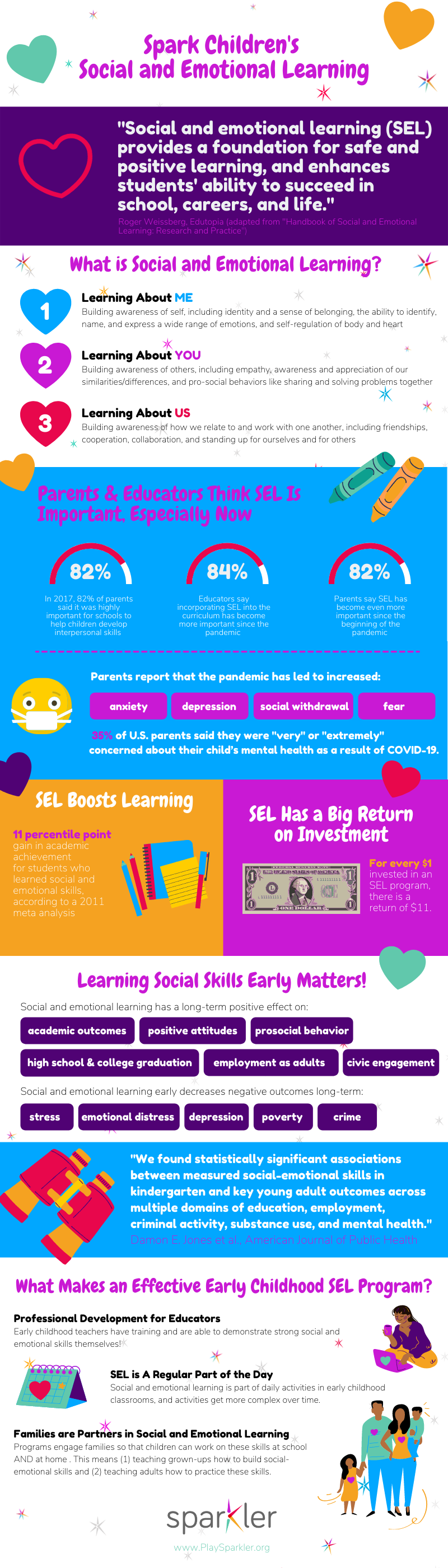
The months of playing, writing, and drawing with this little boy as a child psychiatrist were addressing a mental health challenge, but our work together was rooted in the principles of social and emotional learning (SEL). SEL is a longstanding educational concept aimed at teaching children skills such as understanding perspectives, coping with stress, identifying and expressing feelings, and resolving conflicts with other people.
The goal of social and emotional learning is preparing our children to live fulfilling lives, maintain strong relationships with others, thrive academically and personally, and contribute to the world around them.
Incorporating social and emotional learning into children’s early and elementary years can help kids who may already have mental health issues such as anxiety, depression, and trauma, or prevent these challenges from developing them down the line. These skills are the building blocks for children to learn to successfully navigate difficult situations that they often inevitably face, no matter how much we try to protect our children, in the context of a complicated world. (Some children will experience challenges and need mental health support, even if they’re learning social and emotional skills; if you ever have a concern about your child’s mental wellness, please consult with your pediatrician.)
Through decades of research, we know that SEL works: One large-scale study that analyzed more than 200 studies in schools across the nation found that SEL interventions improved students’ attitudes around helping others, helped decrease conflicts in school (including violence), increased students’ ability to identify emotions, and even improved academic achievement. Another study of a program called RULER in over 60 schools found that the SEL program caused students to have less anxiety and depression, better social skills, leadership skills, academic performance, and attention, and even led to less bullying. Another study looking at almost twenty schools in Baltimore followed kids for more than 15 years and found that an SEL program lowered the risk of developing suicidal thoughts by age 19.
Overall, the research shows that social and emotional learning, starting at a young age when the brain is most malleable, can set children up for success years later, as teenagers and beyond.
Developing social and emotional skills is always important, but it is especially vital today, as children and caretakers across the country are reporting increased feelings of unhappiness and highlighting the negative impacts of the pandemic on mental health and wellbeing. Several child mental health organizations declared a national mental health emergency for children in 2021. With mental health challenges on the rise for American kids, children need to develop the skills that will help them to adapt and deal with changing and stressful situations.
During especially trying and unpredictable times, it can feel scary and daunting to prepare children for problems and challenges that even adults can’t understand or predict. Incorporating social and emotional learning into children’s daily lives can help them develop skills that will support their long-term mental health. Here are three strategies that I have found to be both easily to implement and also effective with young children:
At the end of the day, we all want our kids to experience the beauty in the world, to bask in the joys of exploration, to stand back up when they fall, and to follow their big hearts. And in order to do that, we must nurture both their physical and emotional wellbeing. As a child psychiatrist and former teacher, I have seen SEL change the lives of children from all walks of life, in the clinic, at school, or in the home.
Two years into the pandemic, my second grader told me he’d like to plan a playdate with a friend from school. A minute later he asked, “But what do kids DO when they go over to each other’s apartments?” For us, pandemic life is now “normal” and the regular parts of growing up — from hugs to playdates — are not. And, as a parent, I join parents around the world wondering what the long-term impact of these years will be on my own children and how we can help kids bounce back from this time.
During the pandemic, children missed out on many parts of “normal” life. For most parents, the top worry is their children’s exposure to a broad group of skills called “social and emotional development.” Skipping two years of play dates, for example, has ME worried about my child’s ability to relate to others, work together, and solve problems as a team.
At the start of the 2021-22 school year, six in ten U.S. parents said their top concern for the coming school year is their child’s social and emotional wellness, about double the percentage of parents who voiced concerns about their children’s academic learning (source).
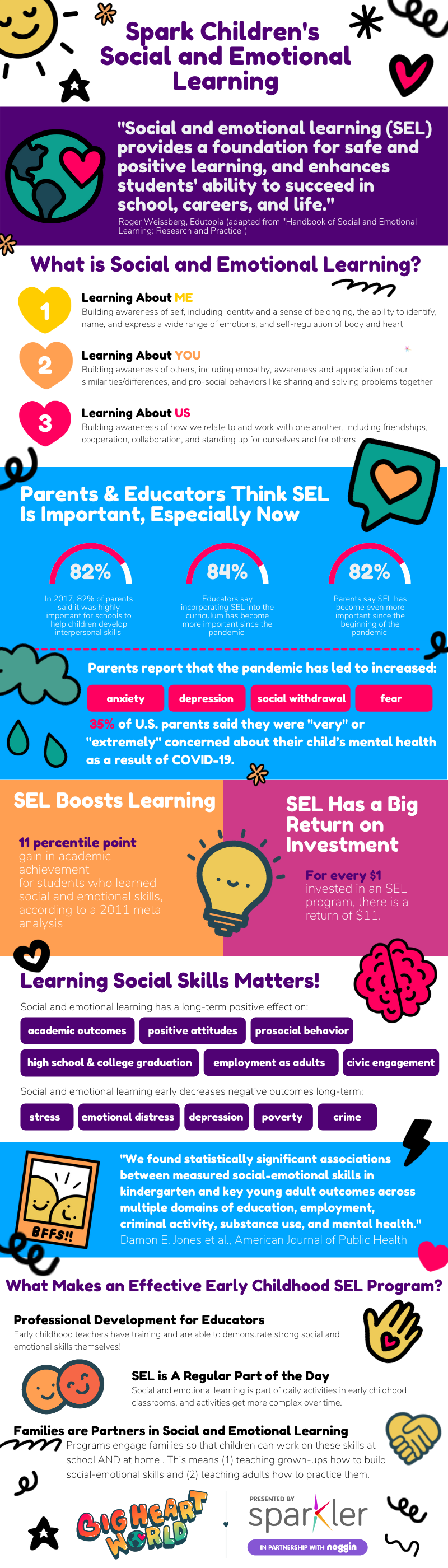
So, what is social and emotional development? Why does it matter? And how can educators and parents prioritize it right now? Learn more in our new infographic about social and emotional learning.
Clive Belfield, Brooks Bowden, Alli Klapp, Henry Levin, Robert Shand, Sabine Zander. The Economic Value of Social and Emotional Learning. Center for Benefit-Cost Studies in Education Teachers College, Columbia University, February, 2015.
Julie Cohen, Ngozi Onunaku, Steffanie Clothier, and Julie Poppe. Helping Young Children Succeed: Strategies to Promote Early Childhood Social and Emotional Development. Zero to Three, 2005.
Emma Dorn, Bryan Hancock, Jimmy Sarakatsannis, and Ellen Viruleg. COVID-19 and education: The lingering effects of unfinished learning. McKinsey & Company, July 27, 2021.
Joseph Drulak, Roger Weissberg, Allison B. Dymincki and Rebecca Taylor, and Kriston B. Schellinger. The Impact of Enhancing Students’ Social and Emotional Learning: An Analysis of School-Based Universal Interventions. Child Development, January/February 2011.)
Susan D. Hillis et al. COVID-19-Associated Orphanhood and Caregiver Death in the United States. Pediatrics, December 1, 2021.
Damon E. Jones, Mark Greenberg, and Max Crowley. Early Social-Emotional Functioning and Public Health: The Relationship Between Kindergarten Social Competence and Future Wellness. American Journal of Public Health, October, 2015.
Stephanie M. Jones, Emily J. Doolittle et al. The Future of Children. Social and Emotional Learning. Princeton, Brookings, Volume 27, Number 1, Spring 2017.
McGraw Hill 2021 SEL Survey. 2021 Social and Emotional Learning Report. McGraw Hill, 2021.
Vivek H. Murthy, M.D., M.B.A. U.S. Surgeon General’s Advisory: Protecting Youth Mental Health. December, 2021.
National Scientific Council on the Developing Child. Establishing a Level Foundation for Life: Mental Health Begins in Early Childhood: Working Paper 6. Updated Edition, 2008/2012.
Paul Terefenko. Q&A With Paul Tough: Environment Matters for Student Success. EducationWeek, June 30, 2016.
Roger Weissberg. Promoting the Social and Emotional Learning of Millions of School Children. Perspectives on Psychological Science, January 18, 2019.
Roger Weissberg. Why Social and Emotional Learning is Essential for Students. Edutopia, Feb. 15, 2016.
How do we proclaim our love for one another?
On February 14, the pressure is on to figure that out — and for some people (young and old), this can be stressful. How do I put what I feel into words? How do I find the perfect gift to symbolize my complex feelings? What’s a meaningful way to show my feelings?
As we consider how Valentine’s Day can feel for adults, many parents and educators wonder how we might recalibrate this holiday for young children. After all, love is an important feeling; we want to help our children identify love and show love to family and friends — but we want to teach about love in a way that can support children’s developing social and emotional skills.
Leading up to Valentine’s Day, store shelves are lined with every possible pink and red heart-shaped candy, plus boxes of pre-made cards where parents can fill in each name from the class list. Leaving the very valid health concerns to a separate listicle, many parents and educators wonder: What’s the point and what’s the effect of the candy and canned message approach to Valentine’s Day? Most children certainly love to receive sweet treats, but do they actually show (and build) love and companionship?
As an early childhood teacher and mother, my focus has been capturing authentic expressions of love and recognizing the moments when these neural pathways are forging, rather than focusing on one day on the calendar when we’re supposed to celebrate love.
It is often in the day-to-day that authentic expressions of love occur: When we’re reading together, helping our friends on the playground, sharing something we learned over lunch.
So how do we highlight loving interactions and create more opportunities for them that foster social emotional growth in a meaningful way — on Valentine’s Day and on the other 364 days of the calendar?
Here are five ideas I’ve used as a mother and a teacher, which can be carried out by families as well as in a classroom setting:
Caring moments are around us all the time. The key is to notice them and say them aloud. Think of yourself as the narrator of a child’s loving moments and be on the lookout for everyday expressions of love. Verbalizing and reflecting back acts of love increases our awareness of them as they occur as well as how they feel.
If you want to take your narration to the next level, you can create your own “love story” together. This can be a book very simply made by binding a few pieces of paper together by stapling or perhaps using a hole puncher and yarn. The title could be ‘I love you’ or whatever suits the author and recipient! Let’s imagine it is a book from a mother to her 3-year-old son: “Mommy loves you” (title page), “I love when you give me hugs” (page 1), “I love reading with you” (page 2), “I love holding your hand” (page 3). You can give this little book to a child and perhaps they would like to add some color to the pages with you! (This is totally optional; your child’s contributions should be natural and unforced.) They can have this book to read any time as a reminder of your love. In classrooms, teachers can help facilitate creating love stories!
A simple question such as, “Who do you love?” can be just the right prompt to invite children to think about their love for parents, pets, siblings, trees, etc. Teachers can write students’ words onto the pages of the book and children can be invited to add their own illustrations.
Many children enjoy drawing and will often draw pictures saying “This is for Mama” or “This is for my Nanna.” Dedicate a table for these authentic love notes by setting out envelopes, paper (doily paper can be fun!), stamps, stickers, crayons, or anything else you might have on hand! Allowing materials to be varied as opposed to Valentine’s themed will allow richer artistic expression and more organic creations. A caregiver or teacher can sit with the children and offer language to go along with their work, such as “You are really thinking about mommy when drawing that picture. Mommy loves you so much!” or “I noticed you are using blue on your drawing for Papa, would you like to give it to him in an envelope?” or “You are putting so many stamps on Mama’s paper. You must love her so much!”
Part of creating the neural pathways for social-emotional development is through thinking about and recognizing feelings. This cognitive-emotional wiring is fostered by thinking about feelings as they are happening as well as reflecting on them afterward.
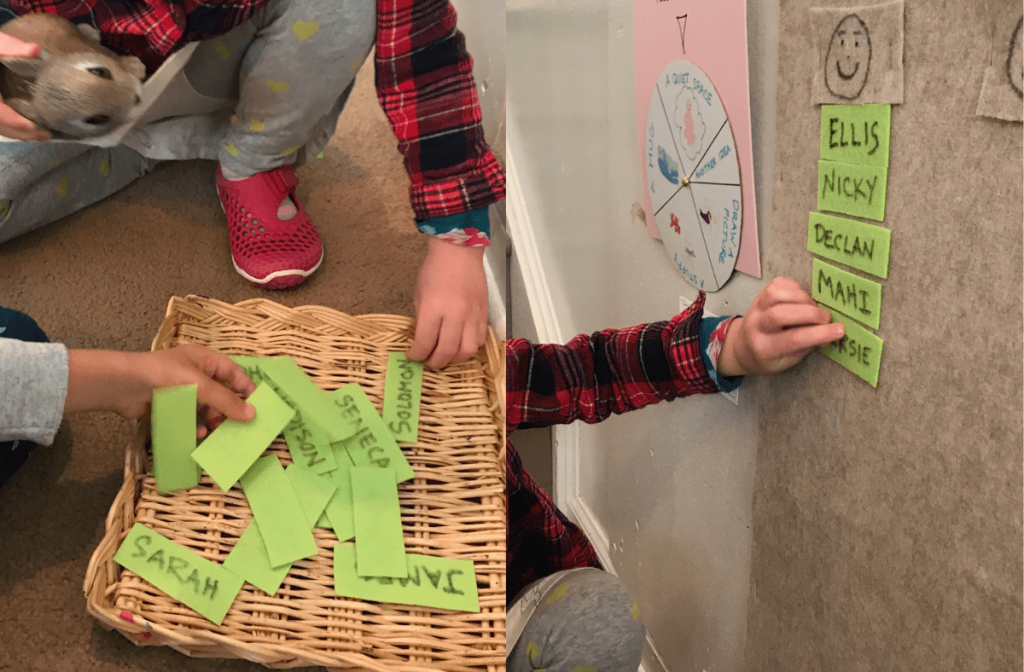
One way to “wire up” for social and emotional development is by creating a feelings board. Use whatever materials you have on hand: a large piece of cardboard, felt, or fabric can be the backdrop. Create a simple face drawing of each emotion: happy, sad, angry, tired, frustrated/grumpy, surprised. Cut them out and place each one along the top of the board and draw columns for each one. Give each child a way to sign up for the emotion they are feeling at any given moment. Perhaps this is done by having a cutout of each child’s name or by using a small photo of them and then using tape or a magnet if it is a magnet board, or by using felt names that will stick to fabric/felt boards. As children engage with selecting their emotions, grown-ups can offer language. Perhaps Sandra receives a hug from a friend and then proceeds to sign up under the “happy” face. Sandra’s teacher can increase her awareness by describing that event: “Sandra, when you got a hug from your friend, that made you feel happy.” Another example could be that Sandra’s block structure gets knocked down and then she goes and puts her name under the “angry” face. Her teacher can reflect back: “You are feeling angry about the block structure falling. I wonder what we could do about it to help you feel okay again?”
The “golden rule” has evolved and now it is more powerful to treat others as they wish to be treated. That means we need to become more aware of other people’s preferences and what feels good to them. Most children are keen to hone this skill! They often make observations about their peers such as which belongings are theirs (shoes, jackets, water bottles, stuffies, etc.!), recognizing the parents and family members of friends, and noticing what classmates like and do not like. Teachers and parents can use “narration” to highlight when we see children make connections with peers.
For Example: Tanya hears Holly say she is thirsty. Tanya gets Holly’s water bottle (having observed which one is hers) and brings it to her. Teacher says: “Tanya, you heard that Holly was thirsty and brought her water over to her! It looks like Holly is really drinking that water!”
For Example: A child trips and falls down. His sister comes over and begins to rub his back gently. The parent can highlight this by saying something like “Suzie, you noticed that Nigel fell. Did you come to check on him? I wonder if Nigel is OK? Suzie you are really taking care of Nigel and giving him a gentle rub on his back.”
Parents and educators can prompt peers to interact with each other by creating opportunities for working together, share, and show their feelings. Here are two prompts to get you started — but many other activities would work, too:
We all need to remember this one all year long, and especially around Valentine’s Day! Some might feel that this is a selfish idea, however, if we remember to take care of ourselves we will increase our capacity to care for others. How can we teach this idea starting at a young age? Much of it starts with noticing what our children respond to and how we can nurture their emotional wellbeing. Here are a few ideas for how to teach self love:
Valentine’s Day can certainly serve as a catapult to refresh and renew our intentions around love. As a teacher, I have noticed how children embrace the chance to show care for each other when creating these opportunities in the classroom.
Children also help us to see love and remind us that it is all around us. When my daughter was 3 years old, one day she gently put her pointer finger right between my eyes on what can be referred to as the 3rd eye and said, “love lives here mommy” — love lives in our eyes, our voices and is in our hands to pass along!


More than 1 billion people across the world are saying “bye bye” to the Ox and “welcome!” to the Tiger this Lunar New Year, which begins on Feb. 1, 2022.
It’s a time of celebration in parts of Asia and around the world as families gather, eat, and celebrate the new year.
Even if YOUR family doesn’t celebrate Lunar New Year, this is a wonderful time for all families to learn about their own identities and explore the other people and cultures, similarities and differences that surround us.
Teachers and parents can help by:
“Lunar” means “moon” and the “Lunar New Year” celebrates the beginning of the lunar calendar, which is based on the 12 phases of the moon.
In the same way that many families celebrate the New Year on January 1, the Lunar New Year is an opportunity to look forward and create goals for the coming year.
Each lunar year is represented by one of 12 zodiac animals. Each animal is associated with different traits. For example, this year is “Tiger,” which is known for its bravery and strength. Children born this year are thought to have some of the tiger’s traits!
Families and communities have different ways of celebrating the holiday, including:
There are lots of wonderful picture books that you and your child can read to learn about the Lunar New Year. Here are a few great options to get you started:
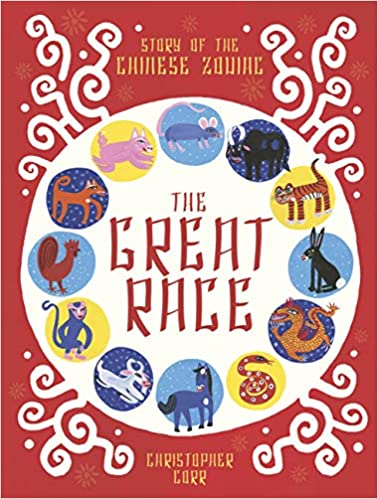
The Great Race: The Story of the Chinese Zodiac
By Christopher Corr
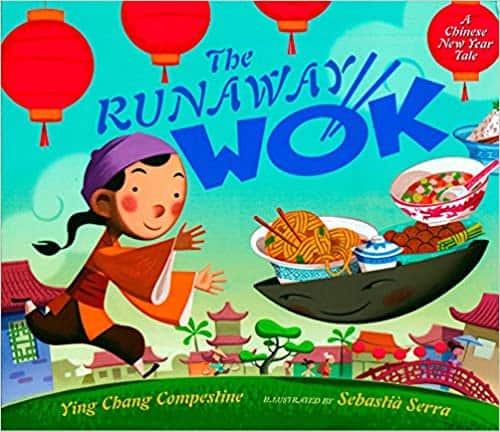
The Runaway Wok: A Chinese New Year Tale
by Ying Chang Compestine and Illustrated by Sebasita Serra
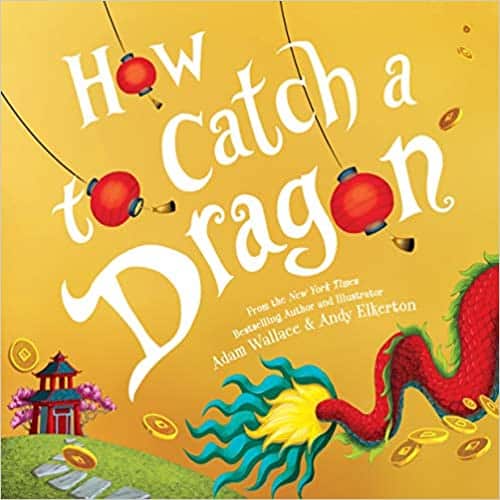
By Adam Wallace and Andy Elkerton
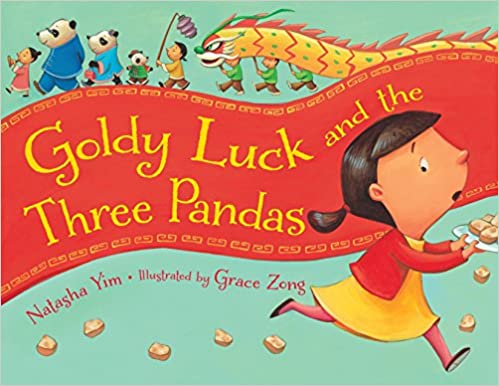
Goldy Luck and the Three Pandas
By Natasha Yim and Illustrated by Grace Zong
The foods that families eat on the Lunar New Year aren’t just food! They represent good luck, prosperity, and togetherness. Here are some examples: Long noodles represent long lives; dumplings and steamed fish stand for wealth and abundance; sticky rice balls stand for togetherness.
The art and decorations of the holiday also hold meaning. For example, many families decorate with lucky colors red and gold.
You can learn more about Lunar New Year by exploring the tastes and colors of the holiday. Be sure to talk to friends and neighbors who celebrate to learn more! Here are some ideas for kid-friendly projects you can try to explore the art and food of the holiday:
Each of us has an identity — it’s related to who WE are, which is related to our thoughts and beliefs and the traditions of our families and communities. Each of us is different, but we also have a lot in common with other people around the world.
Parents and educators can help prepare children to thrive in our diverse world by helping them learn about their own identities AND by helping them to observe other people and notice the many similarities and differences that surround us.
When various holidays are celebrated around the world, we have an opportunity to think about and explore identity, similarities, and differences with the children in our lives. For the Lunar New Year, try asking:

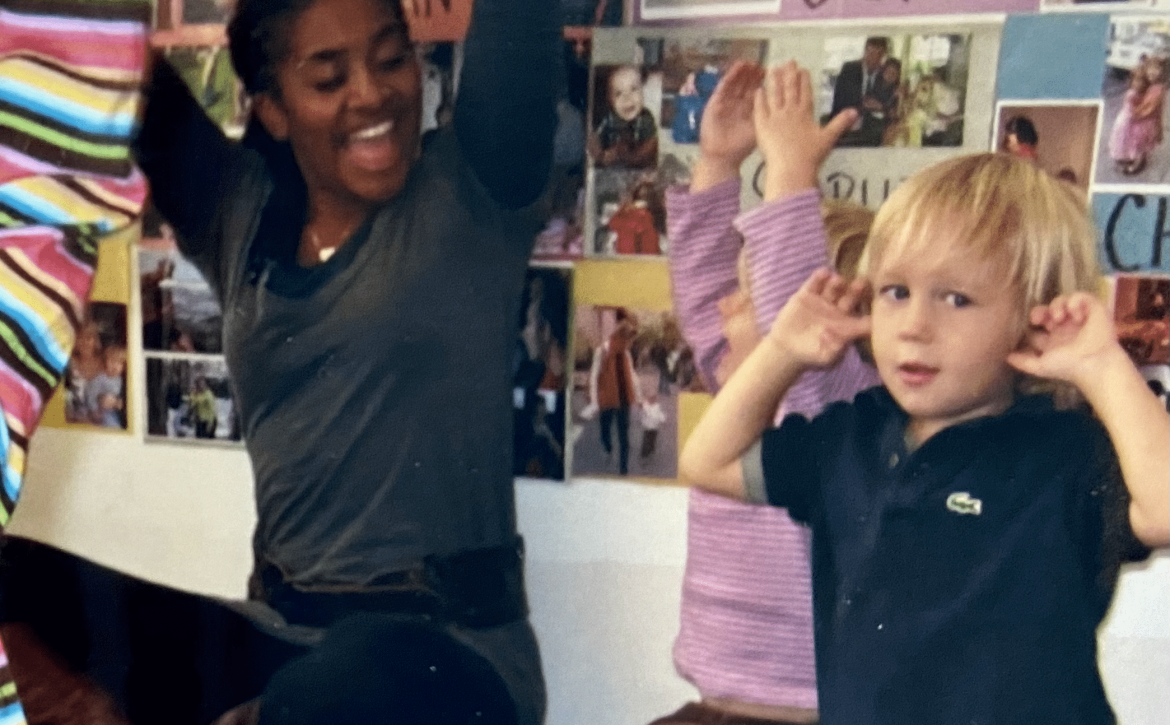
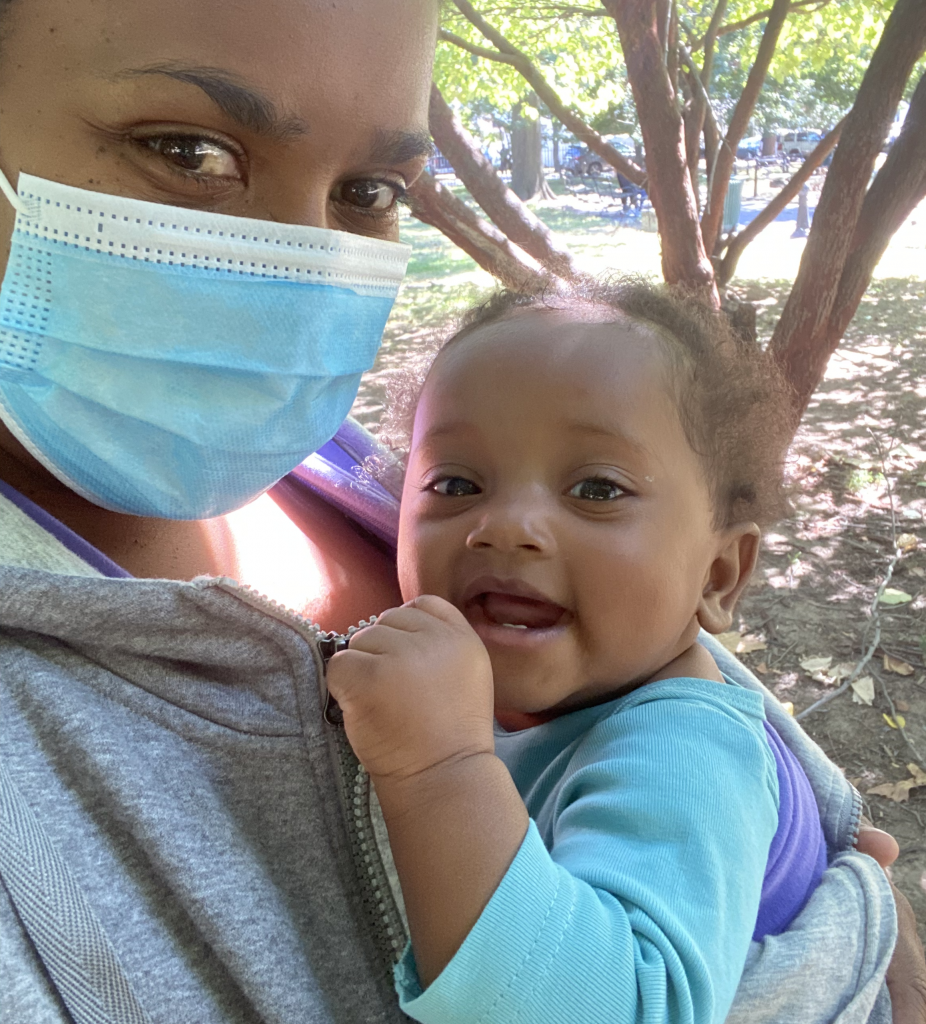
As an early childhood educator and mother of a young child, I am acutely aware of the challenges educators and families have faced over the last 22 months.
My daughter was born about a month before we all went into lockdown in March 2020. As we near her second birthday, it’s hard to believe distancing, face masks, separation from friends and family, and uncertainty have been the norm for her entire life.
It’s unfathomable to think that more than more than 167,000 (roughly 1 in 450) U.S. children have lost a parent or grandparent caregiver to the virus (source).
As parents and educators, we need to consider the impact this “new normal” is having on our individual children and on society as a whole, especially since we know how important the first three years of life are in children’s development (source). And we need to think about what we can do to support young children, even as they face today’s challenges.
There’s been a lot written about “learning loss” in the older grades (source) (source), but there’s also a growing body of reports and research assessing the impact of the pandemic on children’s mental wellness and social-emotional learning.
Last month, U.S. Surgeon General Dr. Vivek H. Murthy released a youth mental health advisory. He wrote: “Supporting the mental health of children and youth will require a whole-of-society effort to address longstanding challenges, strengthen the resilience of young people, support their families and communities, and mitigate the pandemic’s mental health impacts.”
A recent study from Columbia University and published in the journal JAMA Pediatrics found that that babies born in the first year of the pandemic, between March and December 2020 scored slightly lower on the Ages & Stages Questionnaire (ASQ) at 6 months of age than children born before the pandemic began.
“We were surprised to find absolutely no signal suggesting that exposure to COVID while in utero was linked to neurodevelopmental deficits. Rather, being in the womb of a mother experiencing the pandemic was associated with slightly lower scores in areas such as motor and social skills, though not in others, such as communication or problem-solving skills. The results suggest that the huge amount of stress felt by pregnant mothers during these unprecedented times may have played a role,” said Dani Dumitriu, MD, PhD, assistant professor of pediatrics and psychiatry at Columbia University Vagelos College of Physicians and Surgeons and lead investigator of the study.
Dr. Dumitriu said these small shifts — at a population level — could have a “significant public health impact.”
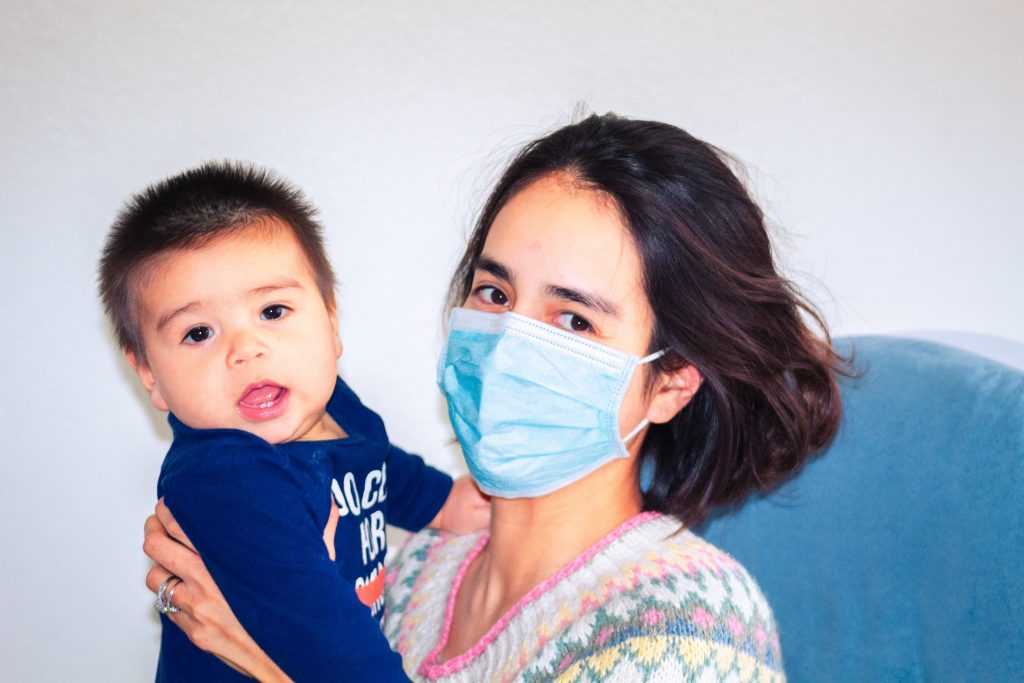
Another recent article indicates that mask wearing by adults and children may impact children’s social and emotional development as masks can impair our ability to recognize others’ emotions. This is particularly difficult for preschoolers who are just learning this complex skill.
Despite our best efforts at transitioning our rich classrooms to “virtual learning environments,” enrollment is down across the country (source).
Some families chose to delay their children’s first school experience while others pulled their children out of programs when distance learning options weren’t working well for them. Those who are currently enrolled certainly missed a good part of the school experience through the height of the pandemic.
All of this missed schooling is reflected in increased behavioral challenges reported by parents and parents’ increased worries about their children’s social and emotional development and well-being (source).
“The year that they were out of school was a year that they didn’t have the opportunities for developing the social skills that normally happen during their period of development,” Dr. Tami Benton told NPR recently. “And you’re sort of catching up on all of that under extraordinary circumstances.” (source).
This is as true for preschool children as it is for those in K-12 schools.
There is still much to learn about the short- and long-term effects of the pandemic on early social and emotional learning (source). The question is: What can we do to help support our children, especially our youngest children who have lived most (or all) of their lives during this disrupted time?
Here are 5 suggestions from a long-time educator and mom of a toddler:
With our focused, thoughtful attention to social emotional learning and the mental health of children and parents, the children in our care will be able to move past this time with resilience and strength.
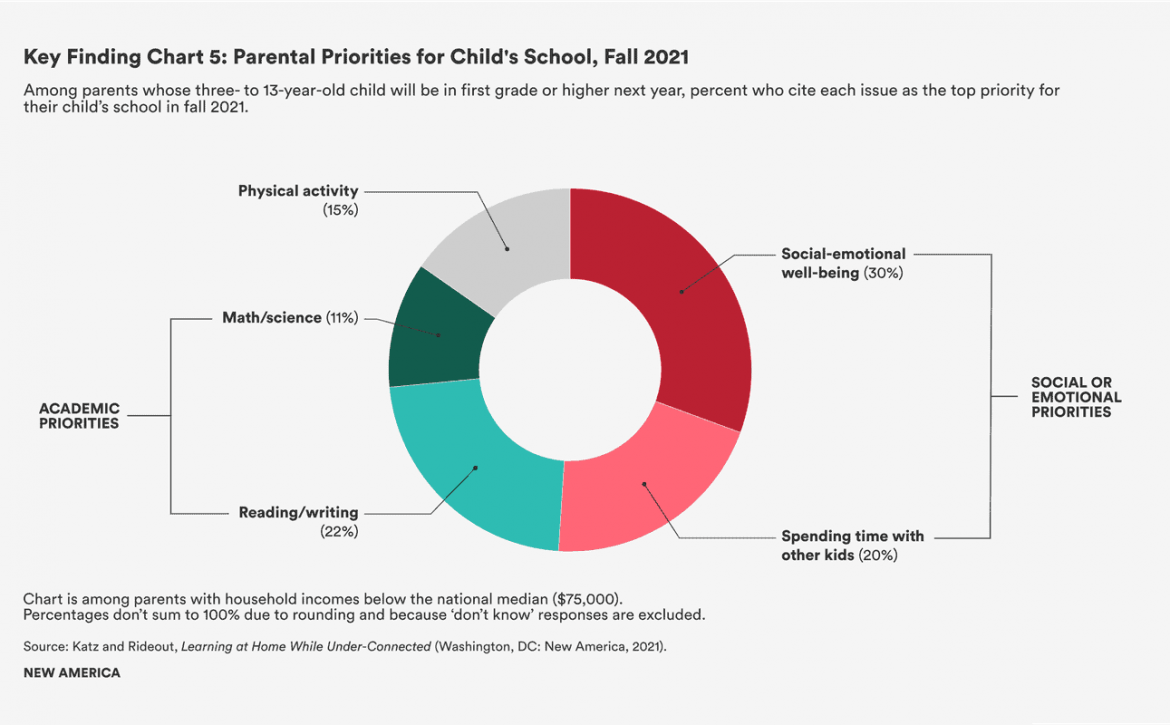
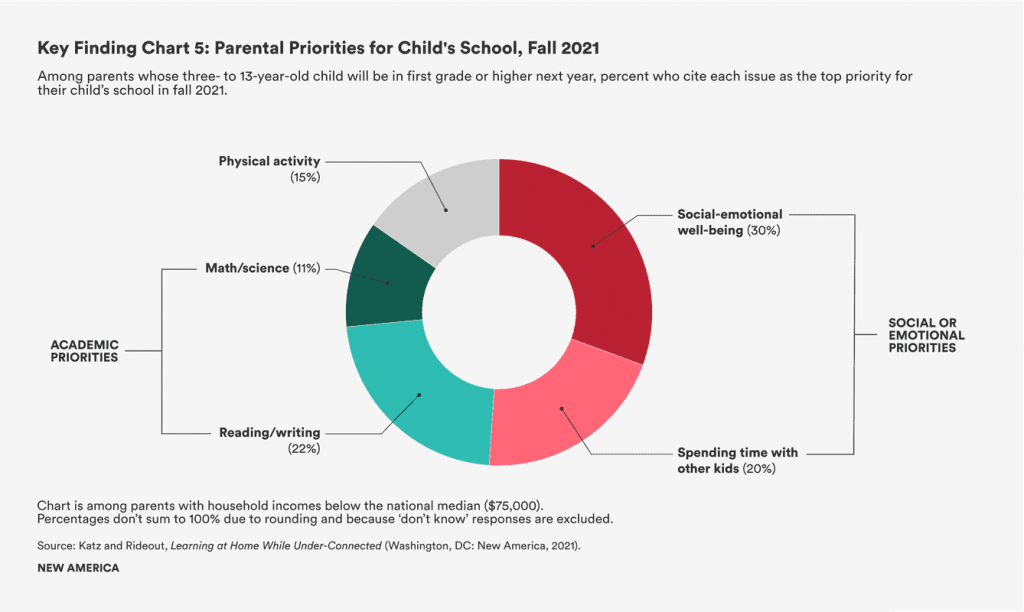
Six in ten U.S. parents say their top concern for the coming school year is their child’s social and emotional wellness, about double the percentage of parents who voiced concerns about their children’s academic learning, according to a new national survey.
Vikki Katz, a mother of two young children and a professor at Rutgers University, who led the study, Learning at Home While Under-connected, said parents’ concerns for their children centered around helping their children readjust to school, express their feelings, develop relationships — both with peers and with teachers — and get used to structure again.
“Every parent’s primary concern is that their children be well and that their children be happy,” she said. “Up and down the socioeconomic spectrum this year, parents have watched their children be lonely and sad and scared, and felt powerless to really make things better for them. A return to school, symbolically, is a return to something they recognize as more normal and that their children will recognize as more normal.”

She said many parents found it possible to approximate academic learning at home: children could practice their shapes, numbers, colors, and early literacy skills.
But interrupted in-person school paused social and emotional learning. Socialization and relationship building cannot be replaced at home — especially for young children who can’t interact with peers on the phone or play with each other via video chat.
Dr. Katz said as parents look toward the fall, many are using educational media to explain the pandemic and big questions to their children; this is especially true among families who are more “under-connected.”
She said many families are also starting to ease their children back into more “normal” social settings to start the process of learning (or re-learning) lessons like sharing, cooperating, and understanding how to express different feelings: “All of the kinds of relationships that make a childhood are slowly returning. So whether it’s in the form of formal structures this summer — childcare, camp, etc. — or whether it’s just spending time with cousins and extended family members, all of these are things that both children and adults have been craving.”