We Need to Talk About Race With Our Kids. Here’s How You Can Start.
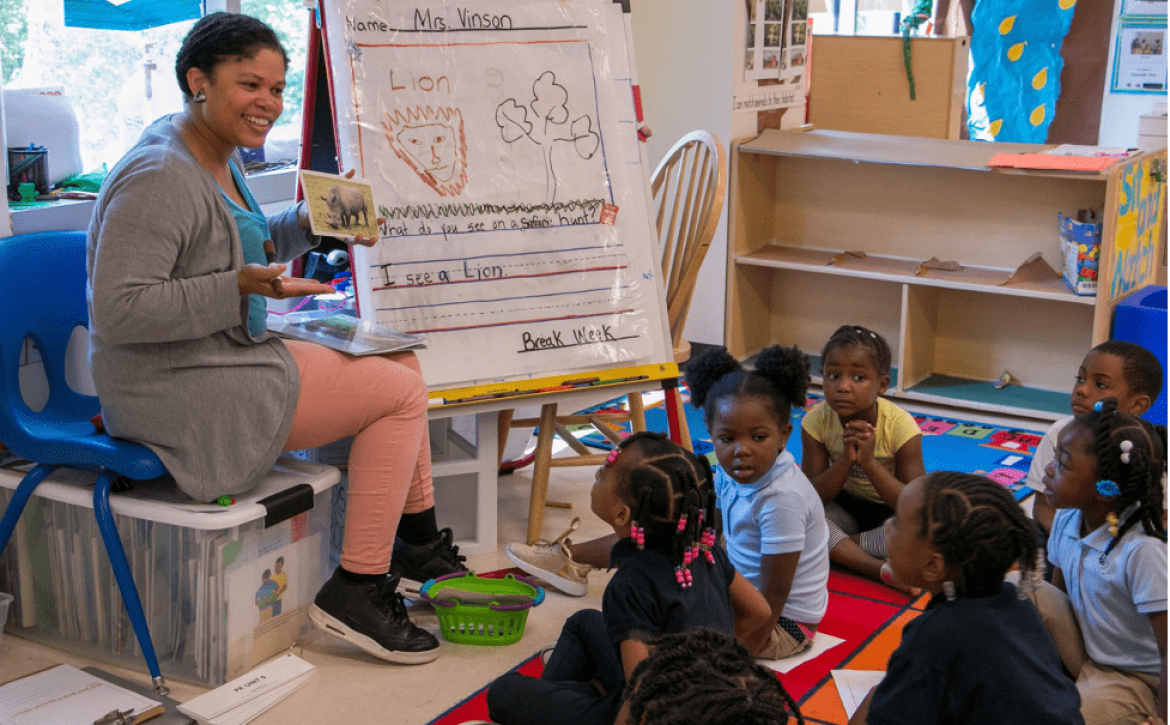
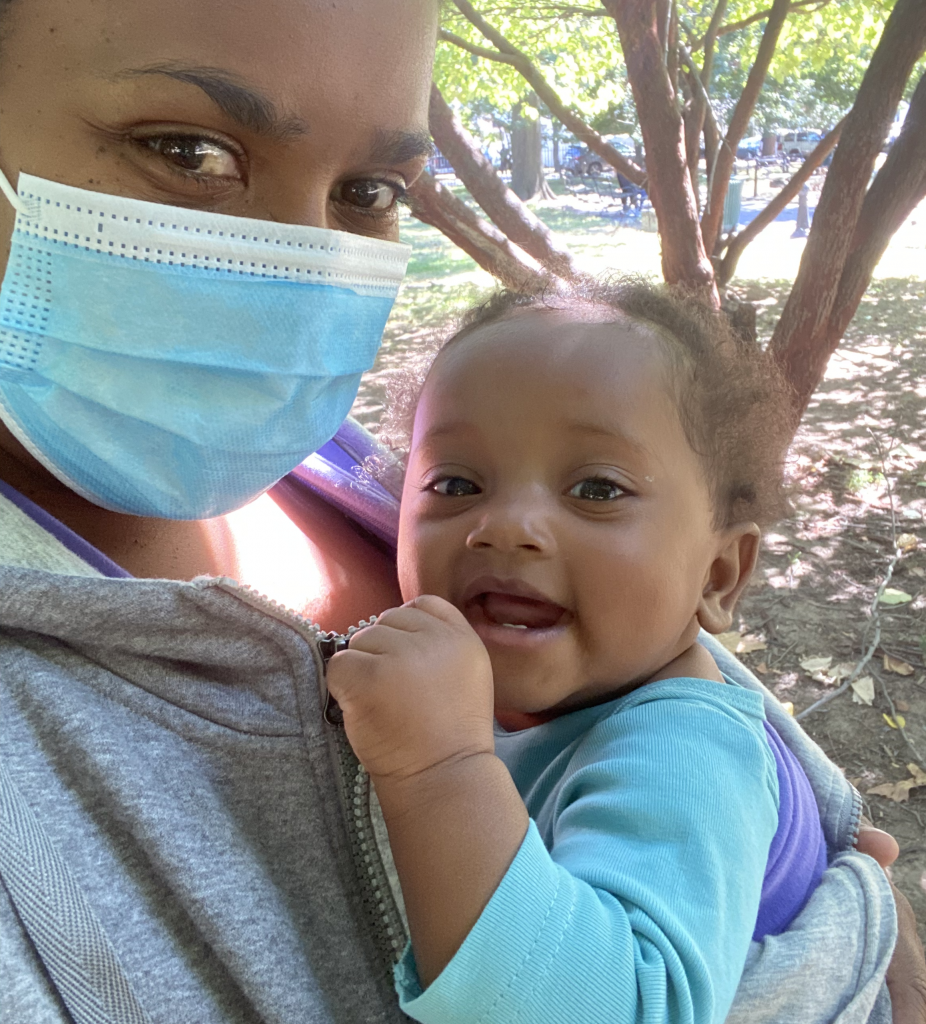
As a long-time educator and new mom of color, the subject of race in early childhood education is one that I’ve wrestled with for years. I’ve been asked by many students in my (predominantly white) preschool about my skin color, my dreadlocked hair, or the shape of my lips. These questions used to make me incredibly uncomfortable.
It’s time for me — and for all of us — to move past the discomfort. Why? We need to talk about race with our children.
Racial disparities are baked into all aspects of our society and our children’s amazing little brains are hardwired to look for — and make sense of — patterns in the world around them. Even if parents don’t consciously or unconsciously express race-based bias, children are like little computers, collecting data, adding it up, and drawing their own conclusions about what they see.
Our Kids Are Spotting Patterns, Crunching Data, and Drawing Conclusions
Children are noticing, for the first time, trends that their grown-ups often take for granted, like the fact that people of color tend to work in certain jobs and live in certain areas. Children notice that the main characters in the books available to them are more likely to be animals (27% of books published in 2018) or white humans (50%) than people of color (source). They also notice the language we commonly use that tends to associate positive things with whiteness and negative things with blackness. Research tells us that children do make the connection between these ideas and the people around them (Katz, 2003; Tatum,1997).
We know that children are busy gathering this data and using it to help them understand the world. So, it is not surprising that children as young as 3 years old can express race-based bias.
A recent study that aimed to revisit the historic Doll Test from the 1940s found that preschool children, regardless of race, still exhibit “a great deal of bias” in how they play with racially diverse dolls.
“Numerous studies show that three- to five-year-olds not only categorize people by race, but express bias based on race (Aboud, 2008; Hirschfeld, 2008; Katz, 2003; Patterson & Bigler, 2006). In a yearlong study, Van Ausdale & Feagin (2001) found that three- to five-year-olds in a racially and ethnically diverse day care center used racial categories to identify themselves and others, to include or exclude children from activities, and to negotiate power in their own social/play networks,” Dr. Erin Winkler, an Associate Professor of African and African Diaspora Studies at the University of Wisconsin-Milwaukee, wrote.
In other words, children can develop race-based bias by living in a racially biased society.
So yes, we have to talk about race. If we don’t, we allow assumptions and biases to persist.
When we assume that young children are “colorblind” or that they are too young to talk about such an important topic, we leave children to draw their own conclusions to explain the patterns that they see in the world. Silencing the conversation doesn’t make the questions go away.
By talking openly about race, you will let your child know that they can come to YOU with questions, and then you have an opportunity to change the narrative.
Where to Begin?
We all know it might not be easy to begin this conversation with the kids in your life, no matter your race and regardless of whether you’re a parent or an educator. So where can you start? Here are four ideas:
- Prepare yourself. When you talk about skin with your child, use simple language. Think ahead about words you could use to describe skin tone: dark brown, medium brown, sandy brown, tan, peach, peachy pink are all good descriptors of skin color.
- Books are a great way to start the conversation. Select books that your child will enjoy that also feature diverse characters. As you’re reading, comment on how your child is the same as and different from the characters in the book. Bonus points if you select a book that features a main character of color who overcomes adversity!
- Create opportunities for your child to interact with children of different races and ethnicities. Try to visit playgrounds in new neighborhoods or visit restaurants to taste new foods. Interactions with people who are different from him or her will help them learn to see the humanity in everyone. We all are different AND the same.
- If your child asks you why a person’s skin is a particular shade, you can take the opportunity to talk about melanin — everyone has it and the more you have, the darker your skin is. Melanin helps to protect skin from the sun.
Talking About Race Can Become as Easy as Talking About Other Differences that Make People Unique
As an educator, implementing these strategies helped me feel more confident in addressing children’s questions in an age-appropriate way and enabled me to respond to their inquiries with questions of my own that pushed their thinking and understanding. In fact, their curiosity often led to an emergent curriculum on the subject. I found that the more we talked about race, the easier it became.
Talking about the hair texture, skin tone, and facial features of different people can be as normal and as easy as talking about differences in gender, height, occupation, skills, and anything else that makes people unique.
Tackling this tricky conversation is one way to help move society in a new direction.
If you’re still nervous, don’t worry! Your child will not mind if you fumble a bit with your words. The important thing is to open the door to conversation. You might even learn some new things, together.




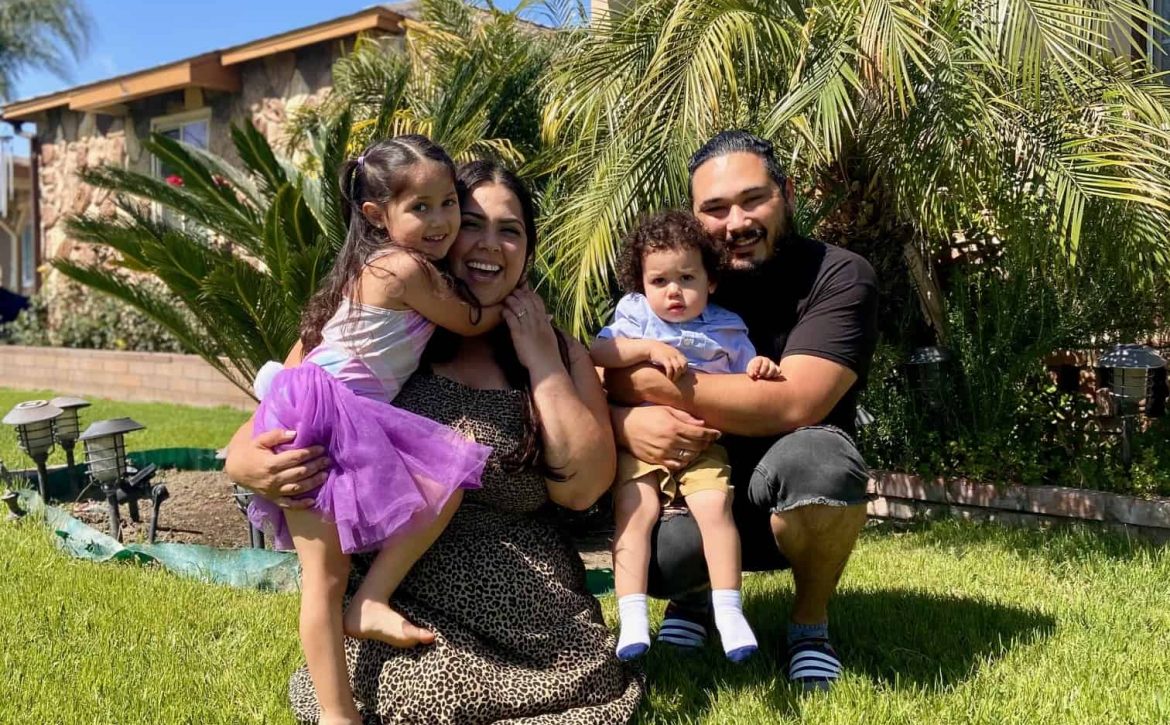
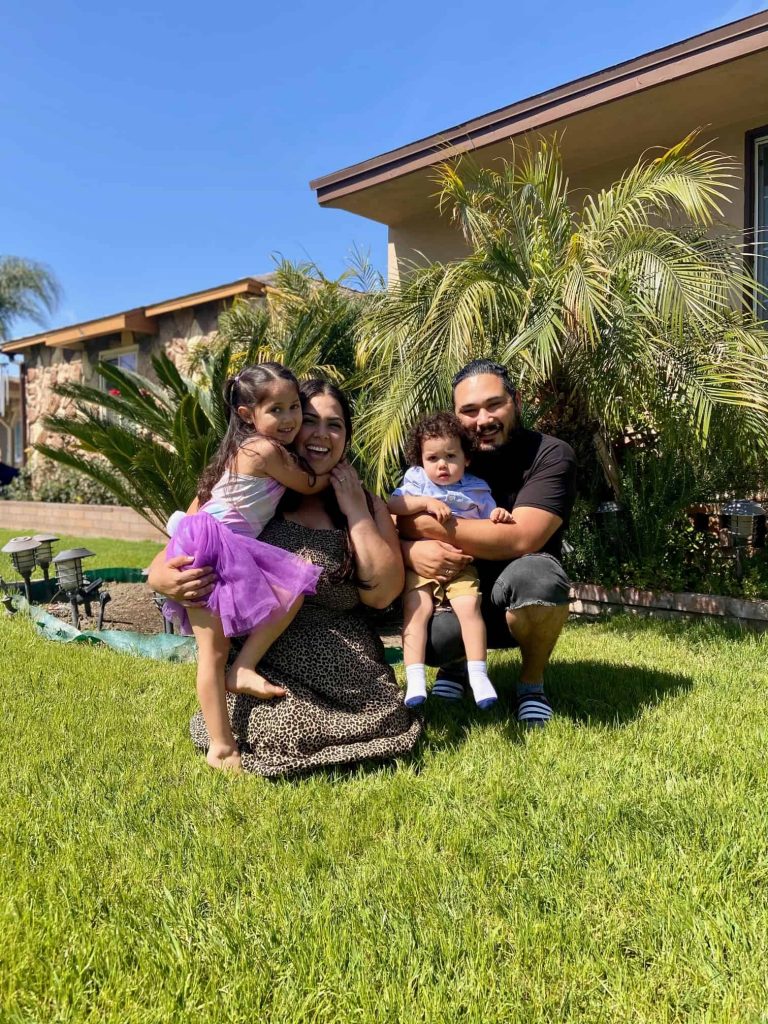 This week, my four-year-old daughter, Abigail Rose, told me that her best friend had punched her at school. I asked if she had told her teacher what happened and she said yes, and that he had gotten in “big trouble” for what he did.
Rather than being pleased her friend had been disciplined, my daughter was sad about it.
“Mom, I asked Ms. Valerie if his time out could be over because he already said he was sorry, and I already forgave him and he’s my friend,” she told me.
My big-hearted baby girl is growing up so quickly and I am so proud of so many of the choices she makes every day:
choices to be kind, gracious, loving, and compassionate. No one is even allowed to kill a bug in her presence because she says that God put her in this world to help care for all creatures, big and small.
So, how did I ever get so lucky? Truly, I don’t think luck has anything to do with it.
Children, from the earliest age, begin to absorb everything around them. The things they see, feel, hear, and experience in their earliest years of life become a part of who they are and who they will one day become. Our children may not remember every moment of their early childhood, but what they will always remember is how we made them feel. How I treat them now is how they will grow up to treat others.
My Abby is incredibly sweet and a wonderful little human, but she is also sassy and spicy and she gives me a run for my money!
I see so much of myself in her and whenever she is giving me a hard time, I try my best to react in love because I know that on my hardest days, I need a little extra love, too.
When she cries because it’s clean up time and the floor is literally covered in toys to the point where you can no longer see the carpet underneath, I validate her feelings and we clean up together because I know how it feels to be overwhelmed. When she is on edge right before her dance recital, I try to remember that she has a tummy full of butterflies and I let her know that it is okay to be nervous and that I’ll be there to support her, no matter what. I live by the golden rule with my children, always keeping in mind how I might feel in their shoes.
My second child, August Rain, was born with a neural tube defect that completely turned our world upside-down. He had a major spinal surgery at four months old, multiple hospitalizations, and a variety of challenges that we faced together as a family in his first two years of life.
There were times I held my daughter as I cried over her baby brother and I would explain that Mommy was feeling sad and scared and that everyone feels those things sometimes but what’s important is that we talk to someone that can help us to feel better, that we cry when we need to and that we don’t try to hide how we feel. I do not hide my heart from my children, I share it with them.
I see now how those experiences have left life-long impressions on my daughter’s heart. Last week, I had a mini meltdown at my computer when August interrupted me for the 500th time while I was busy working and I just couldn’t hold back my tears any longer.
Abby came up and said, “It’s okay, Mommy, I’m here to help you feel better.” Oh, my heart.
Becoming a special needs mom has made me even more passionate about my mission to spread kindness by raising kind kids.
I believe that the best way to raise kids with big hearts is to parent with a big heart. We lead by example and it can be incredibly challenging to be that role model of grace and kindness all the time but when we see our babies growing into these amazing, compassionate little people, it is absolutely worth it.
This week, my four-year-old daughter, Abigail Rose, told me that her best friend had punched her at school. I asked if she had told her teacher what happened and she said yes, and that he had gotten in “big trouble” for what he did.
Rather than being pleased her friend had been disciplined, my daughter was sad about it.
“Mom, I asked Ms. Valerie if his time out could be over because he already said he was sorry, and I already forgave him and he’s my friend,” she told me.
My big-hearted baby girl is growing up so quickly and I am so proud of so many of the choices she makes every day:
choices to be kind, gracious, loving, and compassionate. No one is even allowed to kill a bug in her presence because she says that God put her in this world to help care for all creatures, big and small.
So, how did I ever get so lucky? Truly, I don’t think luck has anything to do with it.
Children, from the earliest age, begin to absorb everything around them. The things they see, feel, hear, and experience in their earliest years of life become a part of who they are and who they will one day become. Our children may not remember every moment of their early childhood, but what they will always remember is how we made them feel. How I treat them now is how they will grow up to treat others.
My Abby is incredibly sweet and a wonderful little human, but she is also sassy and spicy and she gives me a run for my money!
I see so much of myself in her and whenever she is giving me a hard time, I try my best to react in love because I know that on my hardest days, I need a little extra love, too.
When she cries because it’s clean up time and the floor is literally covered in toys to the point where you can no longer see the carpet underneath, I validate her feelings and we clean up together because I know how it feels to be overwhelmed. When she is on edge right before her dance recital, I try to remember that she has a tummy full of butterflies and I let her know that it is okay to be nervous and that I’ll be there to support her, no matter what. I live by the golden rule with my children, always keeping in mind how I might feel in their shoes.
My second child, August Rain, was born with a neural tube defect that completely turned our world upside-down. He had a major spinal surgery at four months old, multiple hospitalizations, and a variety of challenges that we faced together as a family in his first two years of life.
There were times I held my daughter as I cried over her baby brother and I would explain that Mommy was feeling sad and scared and that everyone feels those things sometimes but what’s important is that we talk to someone that can help us to feel better, that we cry when we need to and that we don’t try to hide how we feel. I do not hide my heart from my children, I share it with them.
I see now how those experiences have left life-long impressions on my daughter’s heart. Last week, I had a mini meltdown at my computer when August interrupted me for the 500th time while I was busy working and I just couldn’t hold back my tears any longer.
Abby came up and said, “It’s okay, Mommy, I’m here to help you feel better.” Oh, my heart.
Becoming a special needs mom has made me even more passionate about my mission to spread kindness by raising kind kids.
I believe that the best way to raise kids with big hearts is to parent with a big heart. We lead by example and it can be incredibly challenging to be that role model of grace and kindness all the time but when we see our babies growing into these amazing, compassionate little people, it is absolutely worth it.