
Category: Blog Posts

2
January 16, 2026 by Admin 0 Comments

Anybody Can Serve: Building Big Hearts With Sparkler

Dr. Martin Luther King, Jr. taught people that all people can be great because “anybody can serve.” For young children, service doesn’t start with grand gestures — it begins with simple, everyday moments of helping, sharing, noticing others, and practicing kindness.

On the Sparkler mobile app, families can find manageable AND meaningful activities that they can do with their young children to turn everyday moments into powerful learning experiences, supporting children’s social, emotional, and cognitive development. 

Many Sparkler activities invite families to explore what it means to be a helper in age-appropriate, joyful ways.

In Let’s Help, children walk outside with a caregiver and look for small ways to help — picking up trash, holding a door, or helping a neighbor carry bags. These experiences build social-emotional skills like empathy and self-awareness while helping children understand that their actions matter. When adults ask, “How do you feel when you help others?” children begin to connect service with positive emotions and a sense of belonging.

Activities like Helpers United and Thank a Helper help children notice and appreciate the people who make their communities work: teachers, sanitation workers, crossing guards, delivery drivers, and neighbors. Creating a collage of helpers or thanking someone in real life strengthens children’s language skills, memory, and social understanding. It also builds respect for others and helps children see themselves as part of a larger community where everyone plays an important role.

Sparkler also encourages families to reflect and plan together. In How to Help and Who Needs It?, children brainstorm ways to help at home or in the community — cleaning up toys, donating clothes, or making a thank-you card—and even draw a “helper plan” to hang up as a reminder. These activities support early executive function skills like planning, decision-making, and follow-through, while reinforcing values of generosity and responsibility.

Creative and playful activities such as Kindness Chain Reaction and Friendship Cookie show children how kindness and sharing can grow. Making a paper chain for each kind act or dividing a giant cookie so everyone gets a piece introduces early math concepts like counting and fairness, while also teaching cooperation and compassion. Children learn that small actions—sharing a toy or offering a compliment—can have a big impact.

Finally, activities like Say It Loud and the Little Helpers, Big Impact invite children to find their voices and see themselves as changemakers. Chanting rhymes about standing up for what’s right or listening to stories of kids helping their communities builds confidence, language skills, and a sense of agency.

These Sparkler activities — and many others — help families show children that service isn’t something we wait to do when we’re older. It’s something we practice every day — at home, on the sidewalk, and in our neighborhoods.

By nurturing empathy, kindness, and community awareness early on, families are helping children grow into caring, capable people who know that anybody, no matter how small, can serve.

How to Find Sparkler Activiites

Families, search for activities in your Sparkler mobile application! Once you try it, remember to press “We Did It!” to earn Sparkles (points) and keep track of what you accomplish together. 

Providers — such as teachers and home visitors — who use Sparkler’s web-based dashboard can find these and other activities in Sparkler’s Library. Please search by the activity’s title to find what you’re looking for and share it with families!
IMG_3091
January 16, 2026 by Dana Stewart 0 Comments

Simple Ways Families with Young Children Can Give Back

By Dana Stewart, Director of Education, Sparkler Learning

Before I became a parent, I would spend Martin Luther King Jr. Day volunteering at my local library, park, or food pantry. As a school leader, I would organize coat and diaper drives to encourage the families at my center to support others in their community. Like many, I believe that one of the best ways to honor Dr. King’s legacy is by finding ways that we can be of service to others.

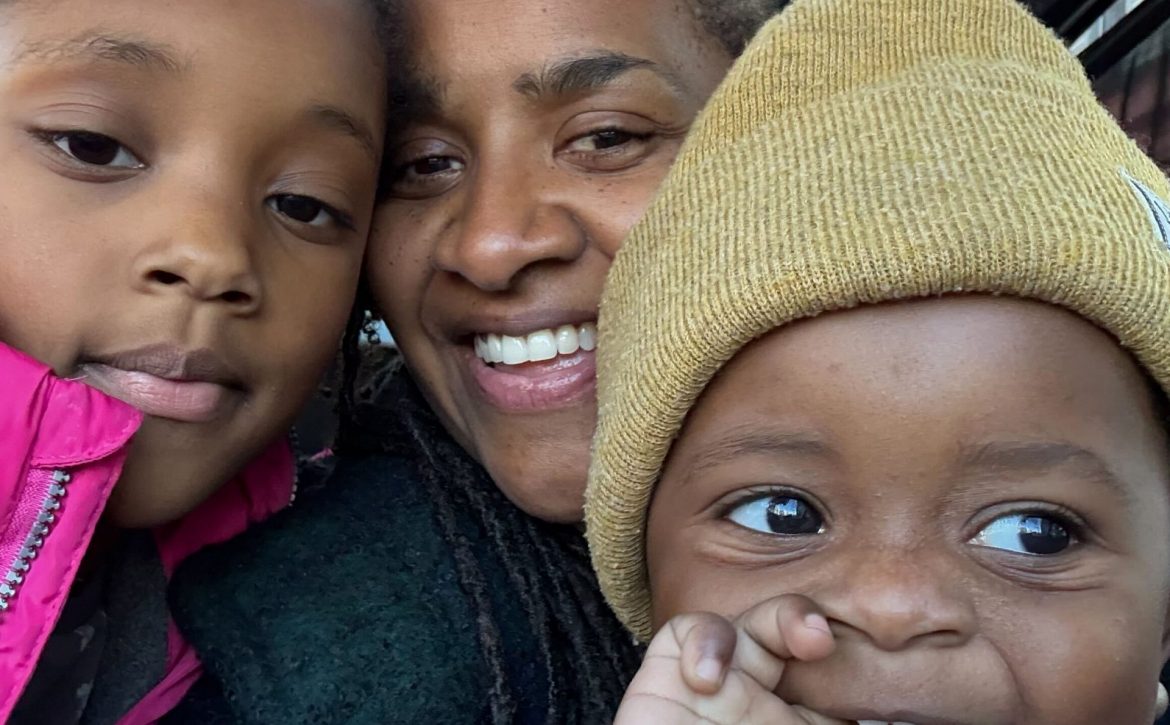
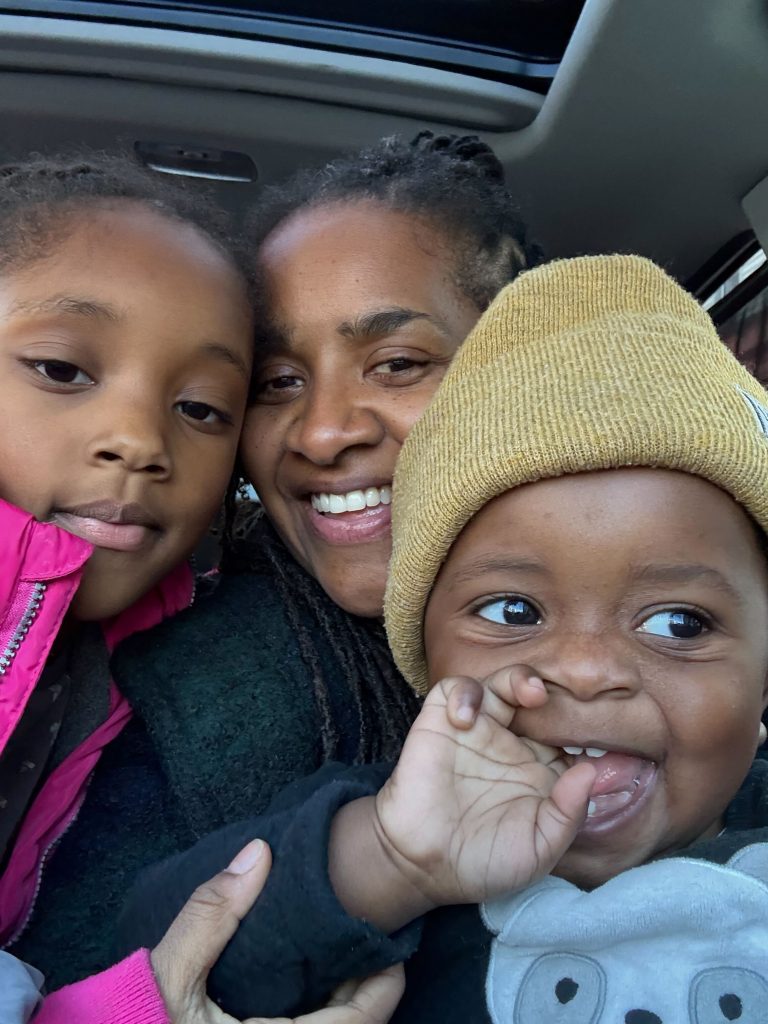
Now, as a mom to a 1-year-old and a 5-year-old, I’ll be honest, sometimes the idea of “giving back” can feel overwhelming. Raising young children is a fulltime job. My days are full and my energy is limited. Even leaving the house can feel like a major undertaking. It’s understandable that many parents think that community service is something we’ll get to later, when our kids are older. 

But what I’ve learned, both professionally and personally, is that caring for a community doesn’t have to be separate from caring for our children. In fact, some of the most powerful lessons about empathy, justice, and belonging are learned as we go about our daily life together.


Service Can be Small — and Still Matter

I still love volunteering, but between laundry and naps, I am not in a season where I can spend hours on a service project. These days, our acts of service are small moments that can fit into our hectic life: bringing in a neighbor’s trash cans, baking muffins to share with friends, or making a card to brighten someone’s day. These moments may seem small, but they are how children begin to learn: I belong here. Other people matter. We help each other. 

Dr. King believed that acts of love and dedication are what build strong, just communities. Those acts don’t require perfection or grand gestures. They require intention.

Simple Ways to Give Back — With Young Children

Here are a few realistic, age-appropriate ways families can practice service together: 

  1. Care for your immediate community. Young children learn best through what they can see and touch. Watering a shared garden, shoveling a neighbor’s walkway, or picking up trash at a local park are tangible ways to show care for shared spaces.
  2. Practice kindness out loud. Explain the reason behind your acts of kindness: “We’re bringing soup because our neighbor isn’t feeling well,” or “We’re donating these toys so another child can enjoy them.” Naming the why helps children connect actions to values.
  3. Share what you have. When you pack your unused household items to donate, invite your child to choose a few of their own gently used books or clothes to donate. Your child may struggle with this sometimes — and that’s okay. It can help to make giving less abstract. For example, “I wonder if your friend would be happy to have these ballet slippers that you’ve outgrown.” or “Choose five books that you’re not interested in to leave in the free library, and we can look for new book for you.” Those conversations about fairness, gratitude, and generosity are part of the learning.
  4. Include children in everyday helping. Service doesn’t have to be formal volunteering. Preparing sandwiches for the food pantry, writing a thank-you note to a teacher, or checking in on a friend are all ways of showing up for others.
  5. Give and receive. Being a part of a community means giving AND receiving. When my daughter receives trinkets from a friend or watches me receive baby clothes from a neighbor, she learns first-hand how it feels to receive help from others, which encourages her to share more.

Why This Matters, Especially Now

At Sparkler, we believe that children are capable of understanding big ideas when they’re introduced with warmth and respect. Service builds more than empathy, it builds confidence, communication skills, and a sense of purpose. When children experience themselves as helpers, they begin to see that their actions matter. They can be a hero to someone else!

And for parents and caregivers, practicing service together can be grounding. It reminds us that even in seasons of exhaustion, we are connected to something larger than ourselves.

On this Martin Luther King Jr. Day, I’m not aiming for grand gestures. I’m aiming for presence, connection, and small moments of service. We will talk about fairness at the dinner table; we will squeeze a small act of kindness between naps and bedtime routines.

On Feb. 4, 1968, Dr. King said, “Everybody can be great because anybody can serve…You only need a heart full of grace, a soul generated by love.” His words remind us that greatness does not require people to achieve prerequisites or achieve at a high level or large scale — it’s about service. And when we invite our youngest children into that work, we’re not just honoring his legacy, we’re helping to build the compassionate communities he envisioned, one small act at a time.

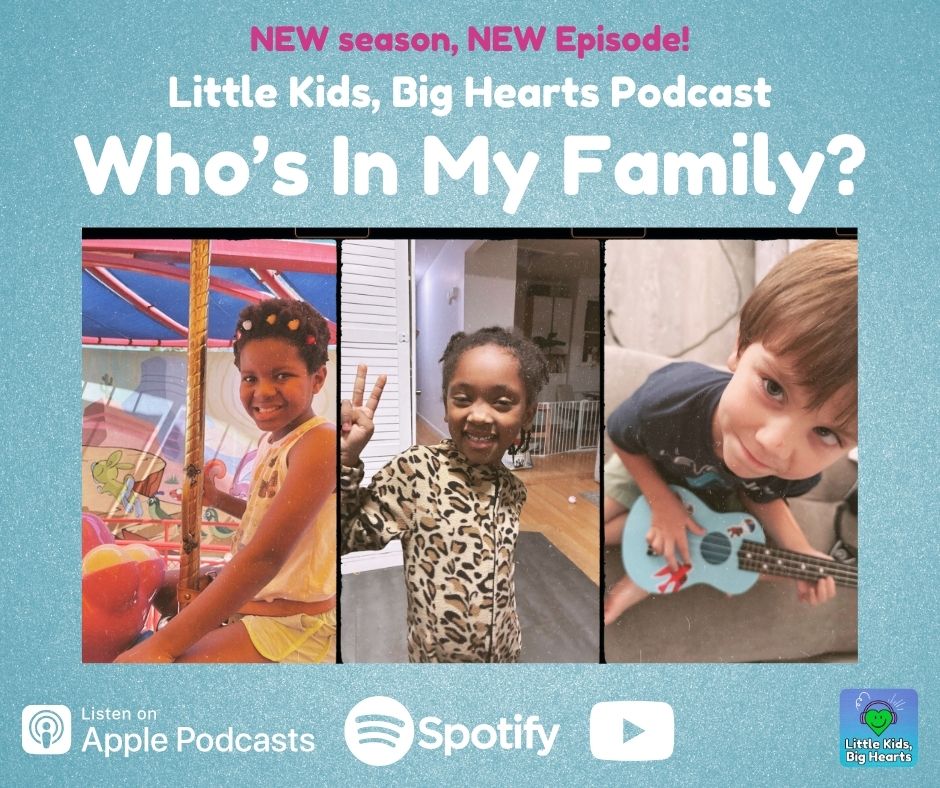
New Episode Announcement Who’s in My Family
January 9, 2026 by Admin 0 Comments

Season 5 of Sparkler’s Little Kids, Big Hearts Podcast Launches With a Focus on Families!

Season 5 is Here!

The fifth season of the Little Kids, Big Hearts podcast has arrived! This season, we’ll be focusing on family, community, friendship, and more.

Each month, there will be a new theme related to growing big hearts (AKA social and emotional skills). The first Friday of the month, there will be a “kidventure” episode in which kids discuss a topic and then go on an imaginary adventure to the Land of Qook-a-lackas to help friends there solve problems related to the theme. The following weeks of the month, we’ll feature interviews, missions, songs, and fictional stories, all on the same theme!

Episode's Focus: Families

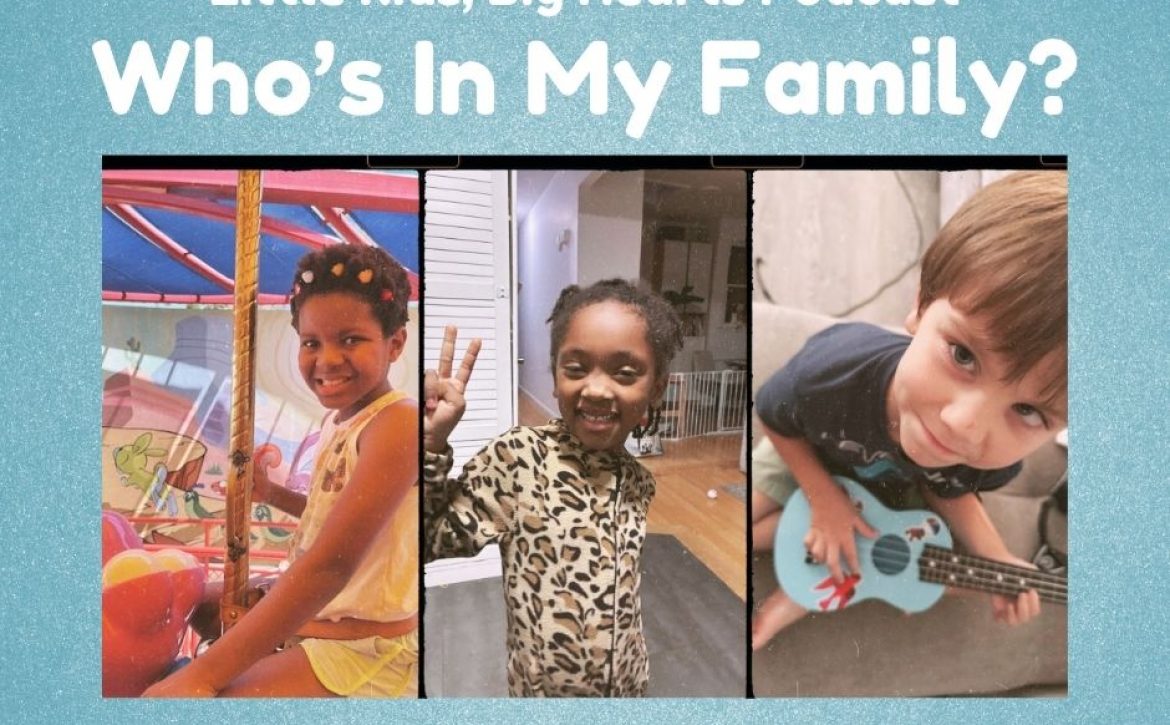
Our January theme is FAMILY. In the episode — “Who’s in My Family?” — our host Todd is joined by three thoughtful kids, Georgia, Jaden, and Carmine, for a warm, meaningful conversation about families and what makes them special.

Together, they talk about family traditions, bedtime routines, games, meals, and the everyday moments that build love and belonging.

Then, the kids close their eyes and travel as tiny imaginary particles to the Land of Qook-a-lakas, where they meet Quilliam, a Qook-a-laka who worries that their family is “just too teeny-weeny” to make a Dream Fest quilt square. With creativity, empathy, and big hearts, the kids help Quilliam discover that families of every size create meaningful memories and that love is what matters most.

The role of Quilliam in this episode is played by Ryann Redmond, an actress and singer. Ryann originated Bridget in Bring It On: The Musical, appeared in the original cast of If/Then, performed in Jimmy Buffett’s Escape to Margaritaville, and made history as the first female Olaf in Frozen on Broadway.

Listen, Watch, Engage!

Listen to the Podcast on our RSS Feed, Apple, Spotify, or wherever you find your favorite podcasts.
Watch it on YouTube.

Listen Together, Learn Together!

After listening, you can discuss and keep the learning going with your family or your classroom to explore the idea of “family” with your children.

In This Episode, Kids Will:

  • Explore different family structures in an inclusive, age-appropriate way
  • Practice empathy through conversation and imagination
  • Learn that love, care, and connection define “family”
  • Use creative storytelling to solve a problem in the Land of Qook-a-lakas
  • Reflect on routines and traditions that build belonging

Grown-Ups, Extend the Conversation By Asking:

  • Who is part of our family? 
  • What are some special things we like to do together as a family? Do we have any traditions? 
  • How are our family routines similar or different from our friends’ routines? 
  • What helps you feel safe, loved, and included at home?
  • What would YOU include on your quilt square? 

Keep the learning going in the classroom with a guided discussion and activities: 

Family Quilt — create quilt square(s) representing YOUR family 

Family Album — write/draw/paste together a book about the people in your family and the things that make your family special

Top Plays 25
December 19, 2025 by Admin 0 Comments

Top Plays of 2025

Throughout 2025, Sparkler families played, learned, and earned Sparkles! 

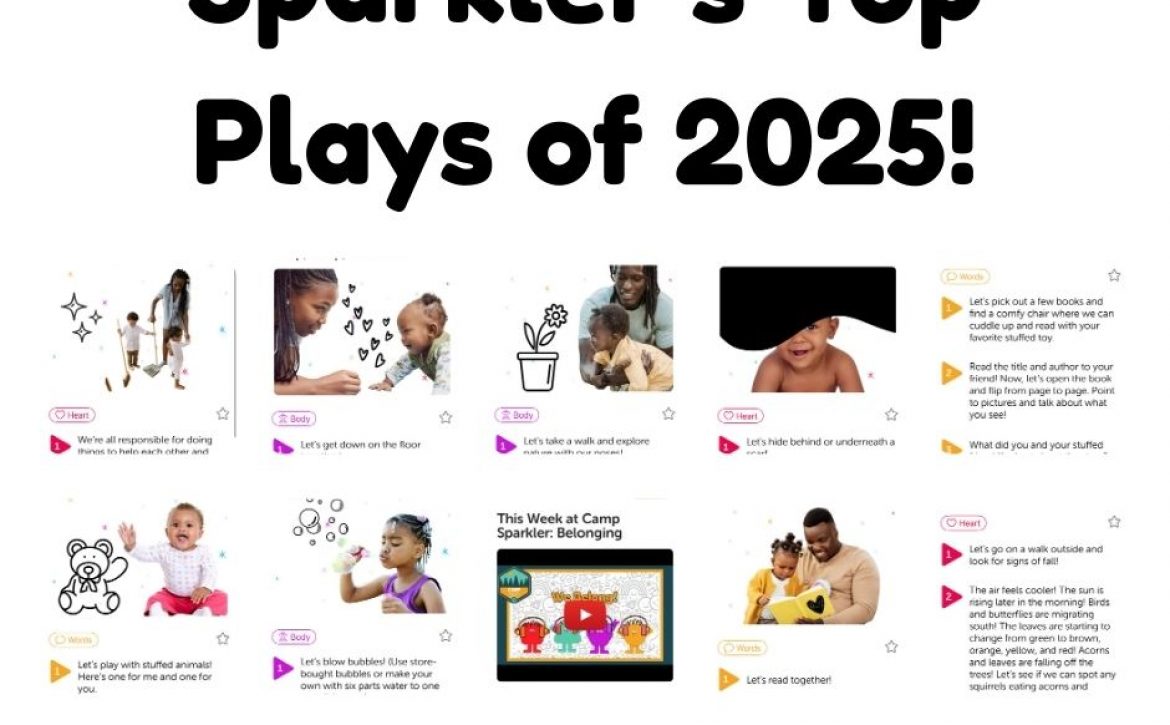
As we approach the end of the year, we’re looking back on the most popular play activities of the year, measured by the families who completed activities and pressed “We Did It!” in the app. The top 10 activities included: 

10. Little Helper

9, Stop, Drop, and Roll

8. Stop and Smell

7. Where Are You? 

6. Read to a Stuffed Friend

5. Allow Me to Introduce Myself

4. Bubbles

3. This Week at Camp Sparkler

2. Read Together

1. Fall Walk

Let’s keep playing, learning, and sparkling together in 2026! 

Screenshot 2025-12-18 at 12.51.46 PM
December 18, 2025 by Admin 0 Comments

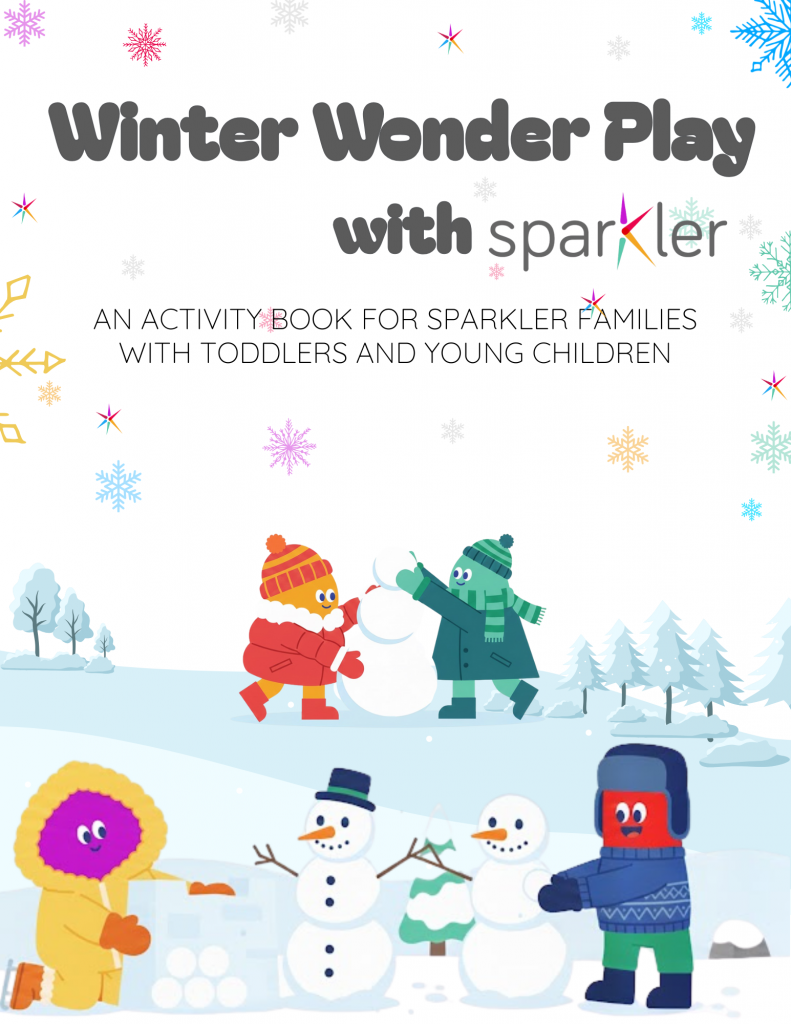
Winter Wonder Play with Sparkler!

This activity book is designed to help families work with their children to grow stronger hearts, words, minds, and bodies.

Families can play the activities in the book together — and then scan the QR code to record their progress and find related activities in the Sparkler mobile app. 

Play along in the app by pressing “We Did It” and adding a photo to grow your memories. Track all you learn together with your child in your Sparkler scrapbook!

Happy winter!

3
December 16, 2025 by Admin 0 Comments

Routines: More Important than Ever

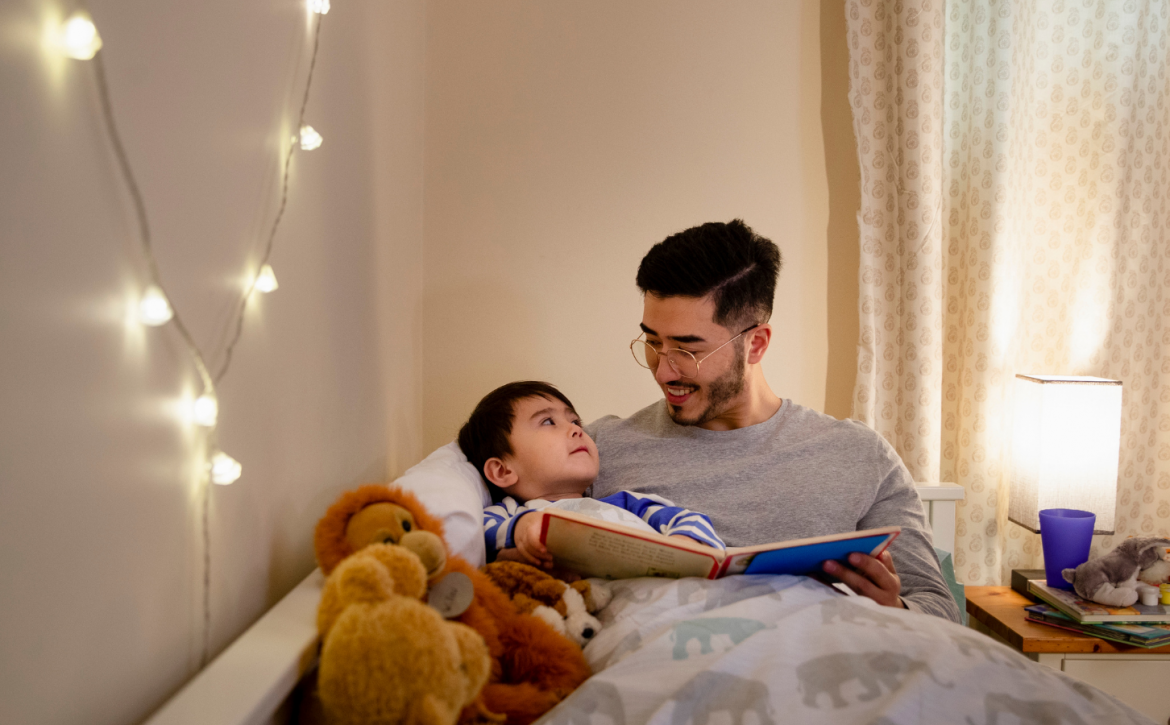
Daily routines — like naps, regular meals, bath time, and reading stories before bed — help children to feel safe and secure. When life follows a familiar rhythm, children know what to expect, which makes the world feel more predictable. This sense of stability supports better behavior, stronger self-control, and the development of important social and emotional skills. 

During busy seasons filled with celebrations, gatherings, and special events, routines can easily slip. A missed nap or delayed dinner may seem harmless, especially when children are excited by music, presents, and extra attention. All that excitement can be joyful, but it can also be overwhelming. 

Young children may not recognize — or be able to communicate — when they are hungry, overtired, or in need of a break from the action. 

Sticking as closely as possible to children’s regular schedule can help prevent meltdowns and tantrums. 

Here are five ways to keep routines during the holidays: 
  1. Try to keep naps and bedtime close to the usual time, even on busy days. If plans run late, build in quiet time to help your child wind down.
  2. Plan meals and snacks ahead. Offer regular meals and healthy snacks so your child doesn’t get too hungry or overwhelmed by holiday treats.
  3. Keep familiar rituals. Don’t skip everyday comforts like bath time, bedtime stories, or favorite songs — they signal safety and calm.
  4. Build in breaks: Step away from the noise and excitement for quiet play, reading, or cuddling when your child needs a pause.
  5. Don’t miss playtime! Make time each day for active play and movement to help your child release energy and reset.

By maintaining routines, even during busy times, families can support children in feeling calm, confident, and ready to do their best. This helps the whole enjoy the season more fully!

Let’s Grow This Fall With Sparkler
October 22, 2025 by Admin 0 Comments

Let’s Grow this Fall with Sparkler

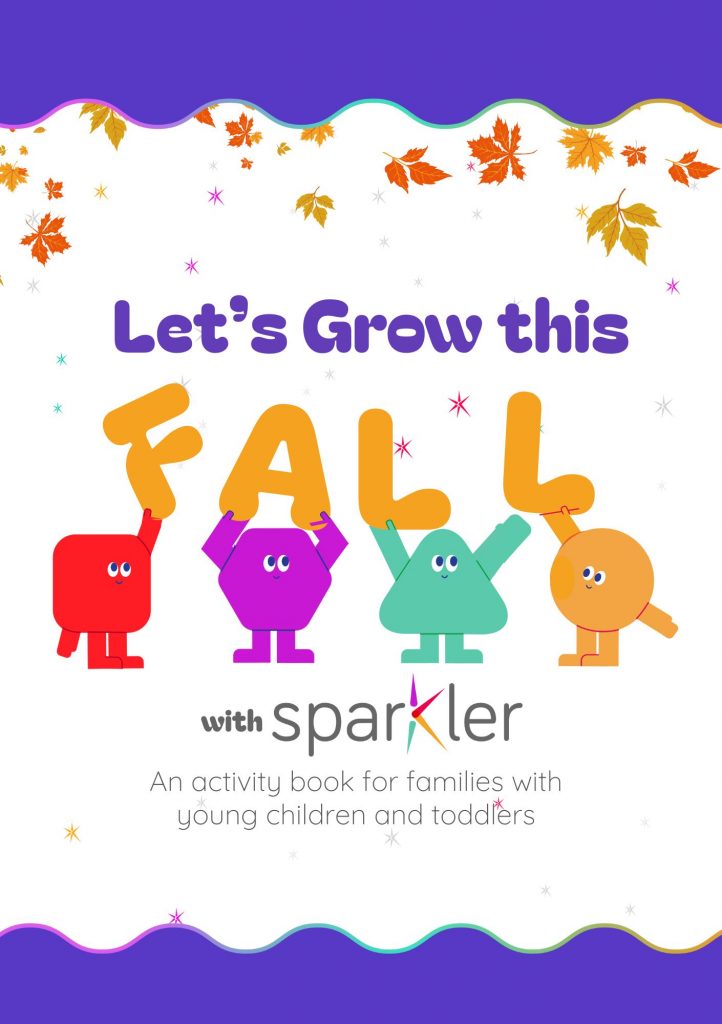
Fall is full of opportunities to grow children’s hearts, words, minds, and bodies. Sparkler offers dozens of way’s to learn through play with young children this season. Here’s a new activity booklet that families can use to prompt play-based learning this season. We explore pumpkins, apples, pinecones, and more! Find even more in your Sparkler app. 

1 (002) (1)
October 22, 2025 by Julia Levy 0 Comments

Q&A: How to Build Early Literacy Skills at Library Storytimes

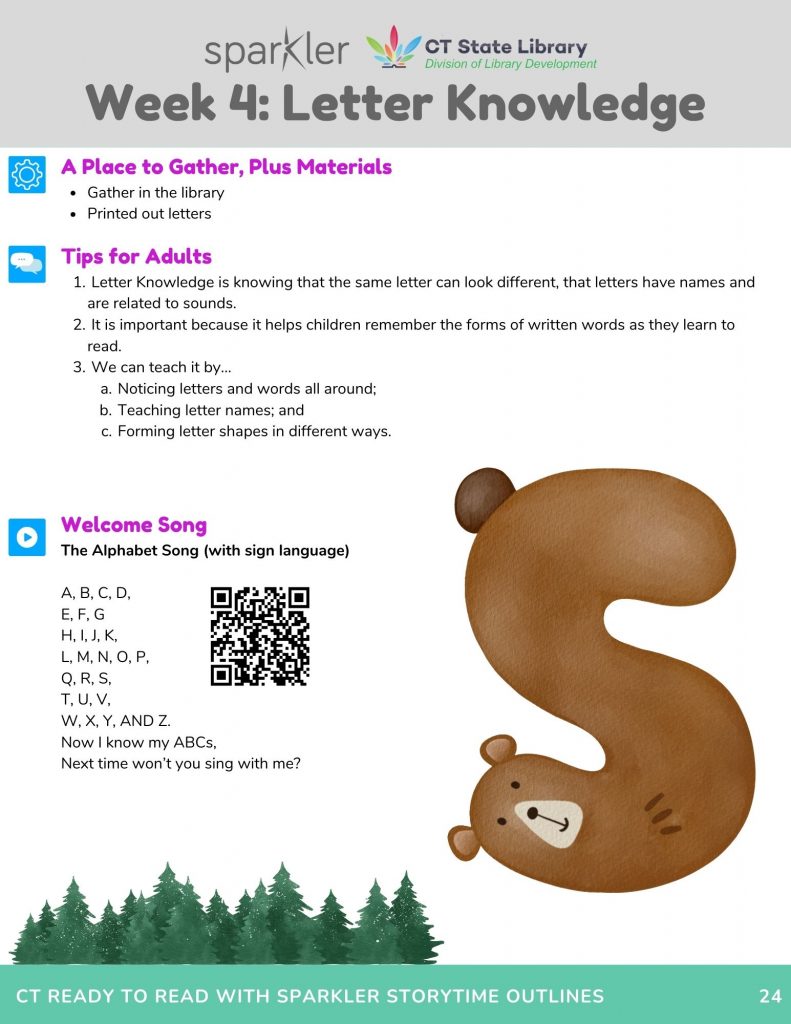
Earlier this year, Sparkler and the CT State Library created CT Ready to Read with Sparkler, a literacy curriculum to use at library storytimes to grow early literacy skills. In this Q&A, Sparkler’s executive director, Julia Levy, chats with Kymberlee Powe, the Children and Young Adult Consultant with the Connecticut State Library, who partnered with Sparkler to create the new curriculum. Kym specializes in youth services and literary equity.

Sparkler worked with you to create CT Ready to Read with Sparkler. Tell us about it!

CT Ready to Read with Sparkler is a curriculum based off of the Every Child Ready to Read initiative that was started by the Public Library Association and the Association for Library Services to Children. It’s a tool to help librarians and other folks who operate in the storytime space to embed early literacy skills into storytimes and activities that they are offering for youth and families. 

It's focused on early literacy through the lens of bears. Why bears?

A lot of public librarians love a theme: They love fall, they love colors, they love bears. What started as a joke…became the ultimate theme of the curriculum, and it demonstrates to librarians how they are able to hold true to themes, and still embed early literacy skills like phonemic awareness or vocabulary into their storytime curriculums.

What makes this curriculum special?

Librarians may fall into the habit of picking the theme, selecting some books that are age-appropriate and fun, and finding a craft that’s age appropriate. Through this process, we might accidentally enforce some of those early literacy skills, but what we want to do is make sure those skills are enforced with intentionality. 

What are the early literacy skills that we're trying to impart to kids and families?

Narrative skills are always very interesting to me. I think that’s because — as a child of the 90s — we did a lot of pretend play. Before the time of TikTok and tablets and all of that, there was a lot of pretend play, which really strengthens narrative skills. I just want to see those skills remain as strong in this generation of youth and going forward. 

Brown Bear, Brown Bear — it’s a classic. 

And if you were going to choose a second theme for a sequel, what would it be?

I’d go with a whole season. We could talk about caterpillars to butterflies, and animals coming out of hibernation and flowers and bugs and dirt. Never gets old! 

How can librarians or others use this curriculum and get involved?

They can go to the Sparkler website and they can find it there or they can go to the Children and Young Adult Lit Guides at the CT State Library and access it there or reach out to me. It’s a small state, and everyone’s got my email! They can easily begin to make small, incremental changes to their storytimes for higher impact with their children and families. 

Image (6)
October 16, 2025 by Admin 0 Comments

Q&A: Learning Through Play in Early Childhood

Sparkler chatted with Jordan Dospil, who is a Senior Content Specialist at the National Center for Families Learning (NCFL), where she creates curricula for the early childhood space. She has a background as an early childhood educator. Sparkler worked together with Jordan and the team at NCFL to create Play With Purpose, a playgroup program for families with young children.

How do you define play?

I think of play very broadly. For me, play is led by the child, keeps their interest, and it’s FUN.

Does play include reading or singing or other activities that don't involve toys?

Yes! Toys can be great, but I think they are completely optional for play. As far as that goes, I think play could even be something that never leaves our heads — that is completely imaginary. My older kids are big daydreamers and that can be a wonderful way to play.

Why is play important for children?

For so many reasons, but the top ones for me are learning and imagining. Imagining is the key to creative problem-solving that we as humans will always need. Aside from that, though, I think it’s essential for us to give kids the time and space to be kids and play is a huge part of that.

You're a mom and early childhood educator. What is the most effective way you've found to read with young children?

My favorite ways to read with young children are to use voices and sound effects and to get them moving during the book. So for sound effects, if a dog is talking in the book I’ll try to make it sound like a dog — barking and howling. If I have wiggly kids, I’ll get them to act out the book — like huffing and puffing to help the wolf blow the house down in “The Three Little Pigs.”

And what are some objects your family likes to use for "play" that aren't traditional toys?

Kitchen supplies are huge — my toddler loves to whisk anything, or use table knives to cut up cheese and things like that. But I think the kind of play we do most involves just ourselves. We play hand games like patty cake or Itsy Bitsy Spider. We pretend that we’re puppies or kittens, or we trade places and she’s the mommy telling me what to do. Last night we were making shadow puppets with our hands.

Sparkler and NCFL — where you work — created the Play With Purpose curriculum to help families "play with purpose" to support their children's early learning and development. What does playing with purpose mean to you?

To me it’s about activating the power of play. You know, kids are learning from us whether we mean them to or not — and they learn through play. I think of the times I’ve seen my kids pretend to go to work like they see me do, or repeat things I say. I’m not trying to teach them those things! But parents really are their child’s first and best teacher. When we can use play meaningfully to teach kids and strengthen our connections with them, that is so powerful.

You've coached many Play With Purpose playgroups over the years. What do you think are the main things that families gain from participating?
One of the big things I see is families recognizing their own power and capability in teaching their children. The other thing is making connections with other families, which can be so hard as a new parent and is so important. 
Last week, we trained Play With Purpose playgroup facilitators in San Francisco! What do you think facilitators gain from facilitating these groups?

I think they learn some new ways to talk to families about the value of play and teaching them new tools to engage their children. For a lot of facilitators, it’s also a new way to connect to families in their community, which helps families access resources and support they need even beyond the playgroup.

Do you have any tips for families who feel like it's daunting to start playing? How can they get started?

I was one of those parents! I still sometimes struggle with imaginative play as an adult. My tips:

  • Start small — even just two minutes at a time can make a difference. (And it’s often easier to keep going once you start.)
  • There are many different kinds of play. Start out by trying what feels right or easy to you.
  • Sometimes a song or book can be an easier way to start because the script is right there. Let your child lead the way.
  • Follow their interests and their lead. You can even start by just sitting next to them while they play and watching and asking questions.

Learn about Play With Purpose in San Francisco

Interested in learning more about the Play With Purpose program in San Francisco?

Kirsten Carlone in video
September 4, 2025 by Admin 0 Comments

Let’s Grow: The Importance of Screening and Follow Up

Sparkler chatted with Kirsten Carlone, the lead care coordinator at 211 Child Development, who is featured in the new video (above) about the importance of developmental screening and following up with families who complete ASQs. Kirsten’s primary role at 211 Child Development is following up with families who use Sparkler. She also provides outreach and training for families and programs across Connecticut.

Why is screening important for families, and why is it important for providers like teachers or pediatricians working with families?

Screening is important because potential delays are not always obvious to parents, teachers, or other providers working with families. Screening helps us identify the areas that could use more support, as well as celebrate the areas that are on track.

How do you support families who have completed an ASQ (Ages & Stages Questionnaire)?

I support families by helping them understand the screening questions and results. I provide information on developmental milestones and can connect families to free programs in Connecticut, like Birth to Three, Preschool Special Education, and Help Me Grow.

What steps do you take after receiving the results?

After a family completes a screening, I review the results and the caregiver’s responses. If the responses indicate a score of monitor or refer, or the caregiver wrote in a specific concern, I reach out to the family by phone to discuss it.

How do you guide families who have concerns?

If, while speaking with the family, concerns are identified, I will support the family in connecting to programs like Birth to Three, Preschool Special Education, or Help Me Grow. I will also share play activities and parenting tips through the Sparkler app so the family can play together while working on the areas of concern.

Can you tell us about the follow-up form and why follow-up is so important?

The follow-up form is important because it helps providers keep track of follow-ups that are due. It gives providers a place to record their recommendations and other matters discussed during follow-up. Filling out the follow-up form also allows Sparkler to track data. Having this data helps us see what recommendations are being made and how families are being supported by their program across the state.

Is the follow-up form similar to the check boxes on the back of the old paper ASQs?

The follow-up form is similar to the ASQ checklist, but it holds a lot more information. The follow-up form allows providers to record more qualitative data and information on the recommendations given to the family. Providers can look back on past recommendations and can make edits if new recommendations are made.

How does the "rescreening" question work on the ASQ follow-up form? Why is that important?

The “rescreening” question on Sparkler’s follow-up form is useful if the child has scored at “monitor” and we want to check in soon on how the child is progressing after we’ve allowed some time (about 6-8 weeks) to let the family practice skills together. When you pick a date in the future, Sparkler knows to prompt the family — when that date arrives — to redo the screening or complete a new ASQ if the child has aged up into the next interval. This can be helpful in tracking a child’s progress, especially when the child is in an age range where the screening intervals are more spread out.

Can you tell us about how families can use the results of the ASQ to find play activities and tips that can help them help their children learn and grow?

Play activities in the Sparkler app all correspond with the areas of development in the ASQ. Families can use their results to find activities by looking at the area of concern. For example, if the score is “monitor” in communication, the family can search for activities labeled “Words” in the app. Families can complete activities and collect “Sparkles” in that area of development to practice skills and prepare for the next screening.

How does the follow-up form help track a child’s progress and needs?

The follow-up form helps track a child’s progress because each form is saved within the dashboard. Providers are able to look back on past screenings and the recommendations that were made. This can be especially helpful when reviewing a new screening and providing new recommendations.

211 is a resource for families and also for programs across Connecticut that need help supporting families. Can you tell us more about that?

Our Care Coordinators are happy to speak with providers to offer guidance and information on the resources available in Connecticut. We often get phone calls and inquiries from providers looking for advice and resources to share with the families they are working with. We also offer training for providers (virtual and in person) and can attend community outreach events. (You can call 1-800-505-7000 to reach a 211 CD Care Coordinator.)

If a Connecticut provider is unfamiliar with some of the free resources available, how can they learn more?

There’s information for families on the Sparkler app and a web page with a lot of useful information that we’ve worked with the team at Sparkler to create. Anyone can call our direct line at 1-800-505-7000 to speak with a Care Coordinator. Our website is also a great resource for providers to learn about available programs and they can request brochures and other materials (for free!). Depending on staff availability, we can provide training on these resources and attend community outreach events.

Learn More About Resources for CT Families With Concerns

Children don’t come with manuals! We all have questions about our children’s development: When will she learn to roll over? When will he learn to talk? What can we do to help her get ready to read? How can I help them make friends?