Screenshot
February 25, 2026 by Admin 0 Comments

Celebrating Read Across America: A Q&A with Meaghan Penrod on Reading Together and Early Literacy
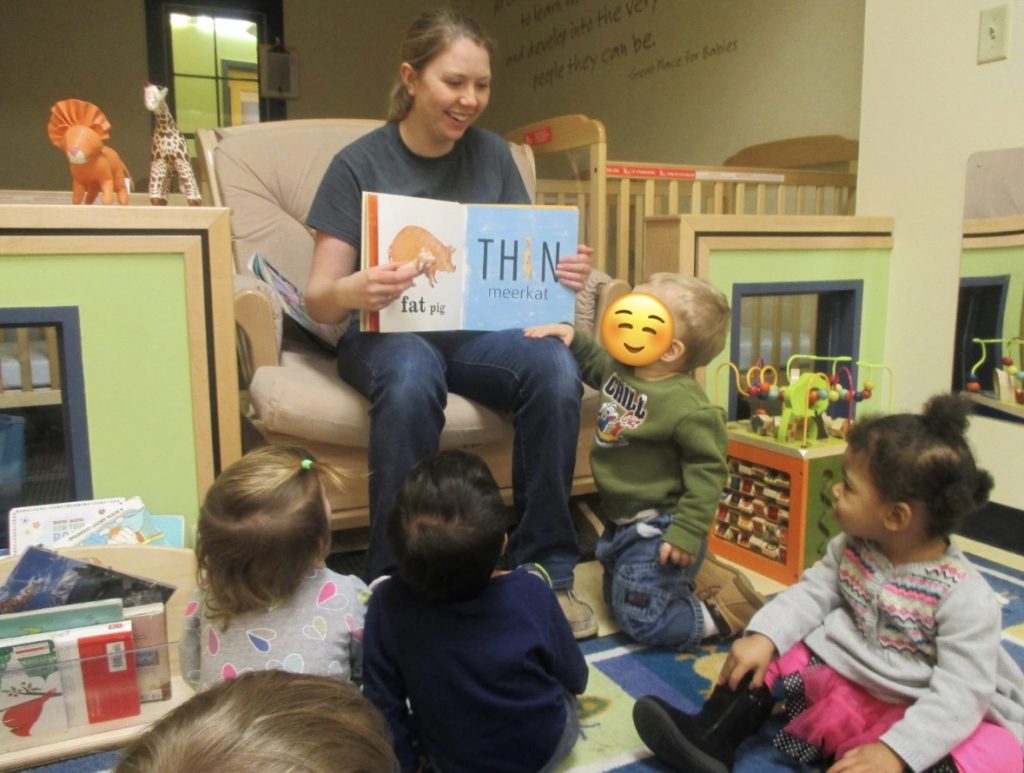
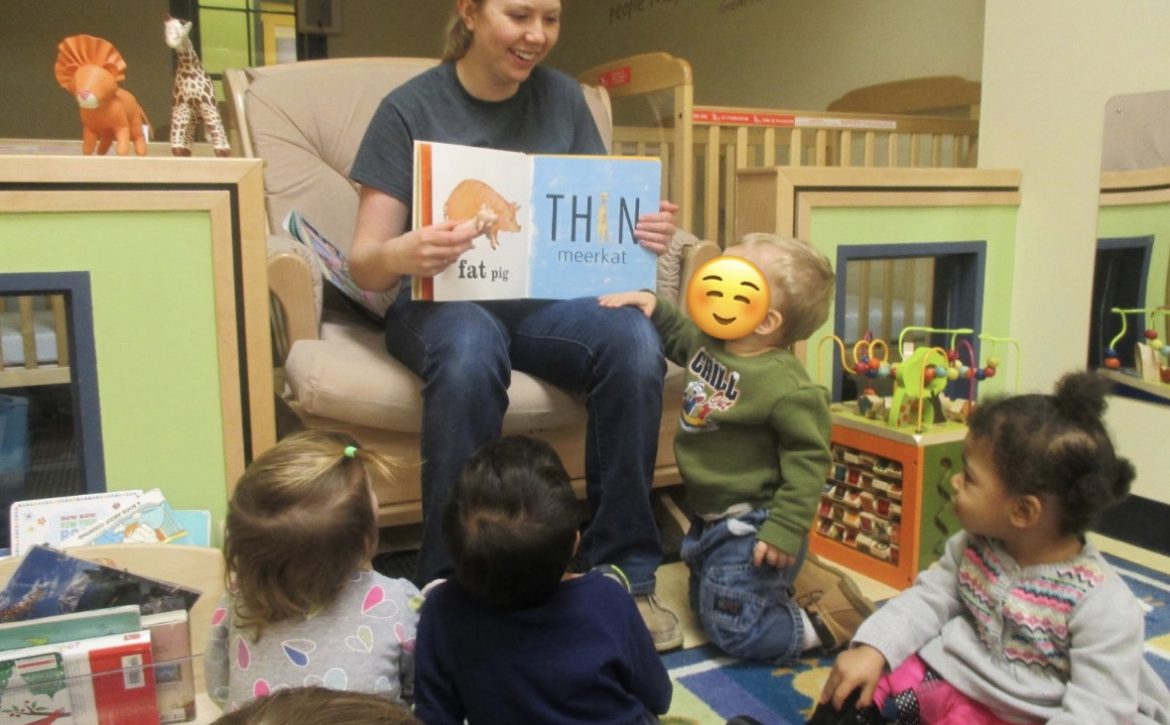
Meaghan reading aloud to a group of young students

In honor of Read Across America, we spoke with Meaghan Penrod, Certified Early Intervention Specialist and Family and Community Engagement Specialist at Sparkler Learning, about why reading together matters so much in the early years, and how families can make it part of everyday life. Meaghan helped to create this year’s special partnership between Read to Grow and Sparkler — in which we’re sharing a lineup of stories read by their authors (and aligned play activities) throughout the week. Learn more online or find it in the Sparkler app starting on March 2, 2026.

Q: Why is reading together so important in the early years (birth to 5)?

Meaghan:The early years are a period of incredible brain development. When families read together, they’re not just sharing a story — they’re building neural connections that support language, thinking, and social-emotional development. Reading aloud helps children hear new words, understand how language works, and begin to make sense of the world around them. But just as importantly, it strengthens the relationship between caregiver and child. That warm, back-and-forth interaction — snuggling up with a book, talking about the pictures, laughing together, learning what interests your child — is what truly fuels early learning.

Q: What does early literacy really mean? Is it about teaching kids to read as early as possible?

Meaghan: Early literacy isn’t about pushing young children to decode words before they’re ready. It’s about building the foundational skills that make reading possible later on and instill a love of reading! That includes vocabulary, listening comprehension, print awareness (like knowing how to hold a book and turn pages), and understanding that stories have a beginning, middle, and end. It also includes conversation. When caregivers ask questions, pause to let a child respond, or connect a story to real life, they’re building comprehension skills that are essential for later reading success. For babies and toddlers, early literacy might look like chewing on a board book, pointing at pictures, or babbling during story time — and that absolutely counts.

Q: How does reading together support social-emotional development?
Meaghan: Books help children make sense of feelings — their own and others’. Through stories, children see characters who feel excited, frustrated, worried, brave, or proud. They get to glimpse into other peoples’ minds and understand other perspectives. That helps build empathy and emotional vocabulary.  Reading together also creates predictability and comfort. A bedtime story, for example, can become a calming routine that helps children feel safe and secure. Those moments of connection build trust, which is the foundation for healthy development across the board.
Q: What advice would you give to families who feel too busy to read every day?

Meaghan: Be gentle with yourself. Reading together doesn’t have to mean sitting down for 20 uninterrupted minutes, and it may change over time with your child’s age and interests! Even five minutes counts. Reading while waiting at the doctor’s office, bringing a book on the bus, or sharing one quick story before bed all make a difference. You can also “read” the world around you — pointing out signs, labels, grocery lists, and environmental print helps children understand that words have meaning everywhere. The goal isn’t perfection. It’s connection and consistency over time.

Q: What makes reading interactive and engaging for young children?

Meaghan: Follow your child’s lead. If they want to linger on one page, that’s okay. If they want to flip back and reread their favorite part, that’s wonderful. With younger children, you might not even read the words on the page. Sometimes it works better to just talk about the pictures. When my kids were little and didn’t have a very long attention span, I’d scan the page to find a picture I knew they’d connect with and talk about that, even if it wasn’t really a part of the “story.” Something like “Oh, do you see that dog? That looks like your aunt’s dog!” This will usually get them interested and talking.  You can ask open-ended questions like, “What do you think will happen next?” or “How is the character feeling?” Let them turn the pages. Use different voices. Make it playful. When children are active participants in reading—not just listeners—they’re building comprehension, confidence, and a love of books.

Q: How can families support early literacy beyond books?

Meaghan: Talking, singing, and storytelling are powerful literacy tools. Narrating your day — “Now we’re putting on your shoes. One shoe, two shoes!” — builds vocabulary. Singing songs supports rhythm and sound awareness, which are important for learning to read. It’s also great for children to see how you engage with reading! When they see you read a book you enjoy, make a meal from a recipe, learn to play a game by reading the instructions, or make a grocery list, they’re learning that reading and words are meaningful and important! At Sparkler, we encourage families to see that literacy is woven into everyday moments. It’s not a separate subject. It’s part of daily life.

Q: Tell us about the special storytime campaign Sparkler and Read to Grow have created in honor of Read Across America Week.

Meaghan: This year for Read Across America Week (March 2–6), Sparkler partnered with the early-literacy nonprofit Read to Grow to bring a very special “Read Together” storytime campaign to families and caregivers everywhere. The idea is simple but powerful: we’re featuring a curated lineup of stories read aloud by the authors and illustrators who created them, so kids can hear the voices behind the books and connect with stories in a meaningful way.

Families can access these read-aloud videos right in the Sparkler mobile app or on Sparkler’s website — and each story comes with related activities designed to extend learning through play and interaction. That might look like movement prompts, simple art projects, or language-building games tied to the themes of the book. 

Q: Wow! What's the big idea of the collaboration?

Meaghan: Our BIG idea this week is read together, play together, learn together—because when grown-ups and children enjoy books side-by-side, children’s hearts, words, minds, and bodies all benefit. We created this campaign in partnership with Read to Grow because we believe deeply in supporting families as children’s first teachers, and we want Read Across America Week to be more than just a celebration. It’s an invitation to build joyful, ongoing reading routines that nurture curiosity and confidence early in life. 



Mandy Gonzalez
February 18, 2026 by Admin 0 Comments

The Power of Community in Early Childhood: Why Belonging Matters

Young children are wired for connection. When they feel like they belong — in a family, a playgroup, a classroom, or a neighborhood — they feel safe and secure. That safety lays the groundwork for growth in every area: emotional, social, and cognitive. 

This February, Sparkler’s Little Kids, Big Hearts podcast is focused on community — a topic that is important in childhood and throughout life. 

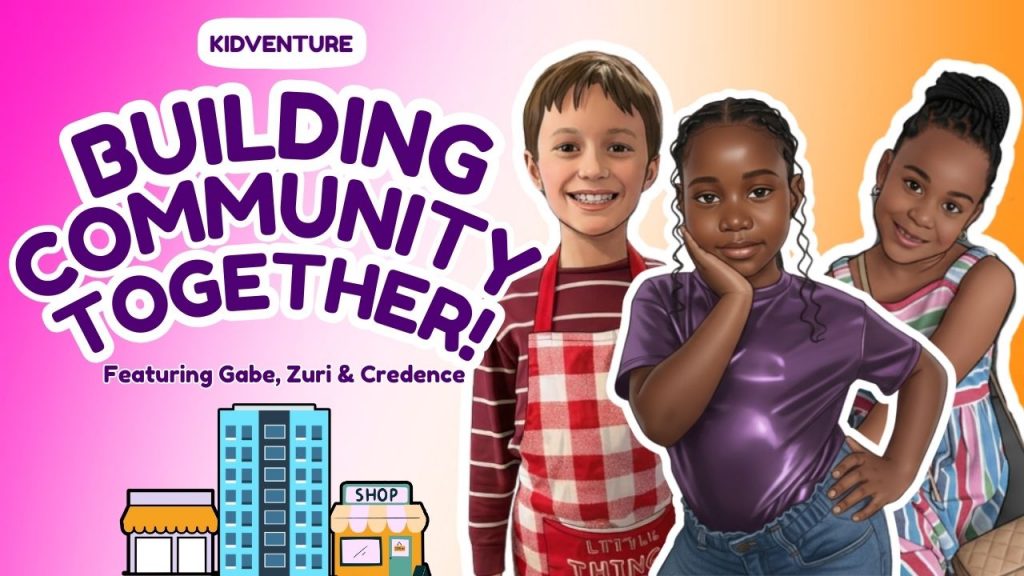
On the first episode of the month — a kidventure episode featuring three kids, Zuri,  Credence, and Gabe — the kids take an imaginary adventure to the Land of Qook-a-lackas where they discover that a big storm has blown all sorts of stuff — from shells to glitter to screws — all over the Land, disrupting plans for the Qook-a-lacka’s big bright block party. Together, they help a Qook-a-lacka friend, Quandy, who is feeling overwhelmed and unsure of how to bring everyone together. With creativity, teamwork, and big-hearted ideas, the kids help transform piles of random objects into games, decorations, music, and art. 

They discover that community isn’t about perfection; it’s about sharing ideas, helping one another, and building something meaningful together.


The guest star of the episode — playing the role of Quandy — is Mandy Gonzalez. Mandy starred on Broadway in the megahit Hamilton as Angelica Schuyler. She also originated Nina Rosario in the Tony Award-winning Broadway musical, In The Heights, for which Mandy received a Drama Desk Award. Mandy also starred as Elphaba in the Broadway production of WickedMandy recently performed a solo concert at Carnegie Hall with the NY Pops and Lin-Manuel Miranda

The second episode of the month is a “mission” episode: kids are sent on a “mission” of doing something to help others in their community. 
 
Coming up for weeks 3 and 4 of the month are a fictional story focused on community and an interview focused on community with an amazing  children’s book author Matthew de la Peña, who created “Last Stop on Market Street,” “Milo Imagines the World,” and other amazing books about community and other vital topics.

Resources About Community

After listening, extend the learning with discussion and play activities to support children’s understanding of the big idea of “community.” 

Sparkler is sharing two different activities: 

Little Helper, Big Impact: Create a plan of the ways you can help out in the different communities you’re part of…and figure out ways to contribute, whether it’s doing something kind for another person, cleaning up, or donating toys you’ve grown out of. 

Helpers United: Create a collage of the helpers in your life.

Listen and Learn More

🌈 Visit The Little Kids, Big Hearts Podcast website: https://playsparkler.org/podcast

🎧 Listen on Apple, Spotify, or YouTube: https://youtube.com/@LittleKidsBigHearts 

🎵 Follow us on TikTok: https://www.tiktok.com/@littlekidsbighearts 

📸 Instagram: https://www.instagram.com/little_kids_big_hearts_podcast 

📘 Facebook: https://www.facebook.com/LittleKidsBigHeartsPodcast 

IMG_9994
February 16, 2026 by Admin 0 Comments

Healthy Smiles Start Early!

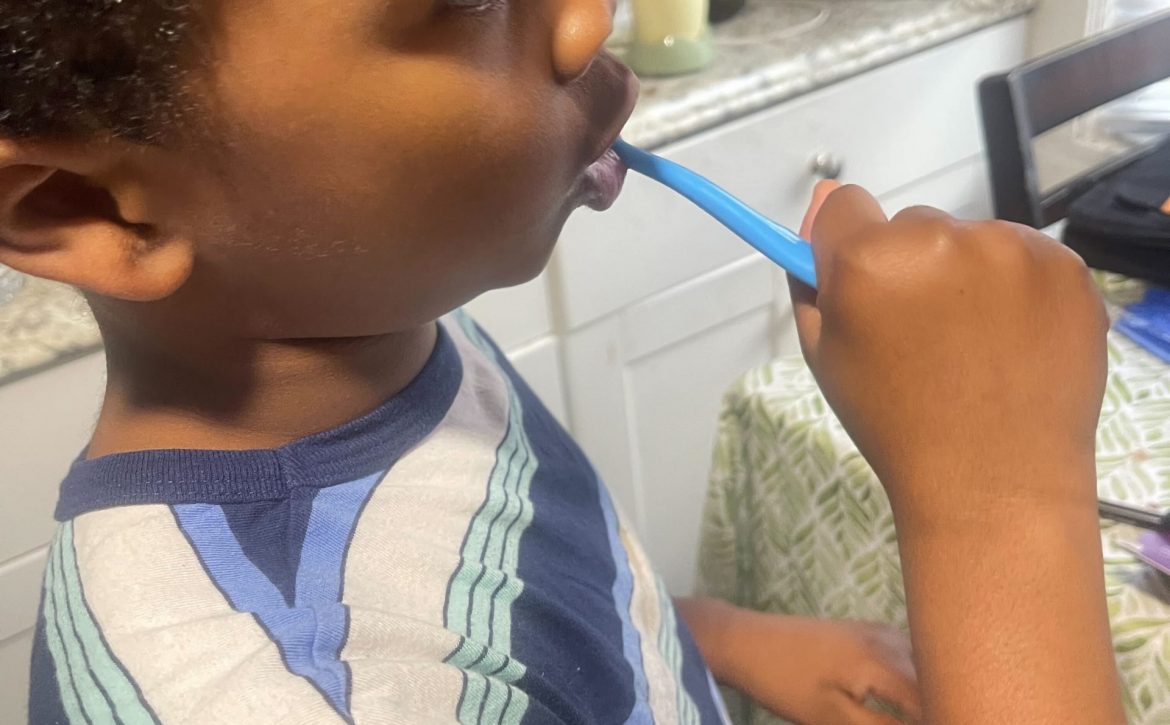
February is National Children’s Dental Health Month — a great reminder that healthy smiles start early! For families with young children (birth to age 5), building strong dental habits now can prevent cavities, reduce discomfort, and set the stage for a lifetime of healthy teeth.

Why Early Dental Health Matters

Baby teeth may be temporary, but they play a big role in your child’s development. Healthy teeth help children:

  • Chew and eat nutritious foods

  • Develop clear speech

  • Smile confidently

  • Hold space for their permanent teeth

Tooth decay is one of the most common chronic conditions in young children — but it’s also largely preventable with simple, consistent care.

Focus on Prevention

🦷 Start Early

Dental care begins before the first tooth appears. Gently wipe your baby’s gums with a clean, damp cloth after feedings. Once teeth come in, brush twice a day with a small smear (the size of a grain of rice) of fluoride toothpaste. At age 3, increase to a pea-sized amount.

The American Dental Association recommends that children visit a dentist by their first birthday or within six months of their first tooth erupting.

🍎 Reduce Sugar to Prevent Cavities

Frequent exposure to sugary foods and drinks increases the risk of cavities. A few simple steps can make a big difference:

  • Offer water between meals (especially fluoridated tap water if available)

  • Limit juice and avoid sugary drinks

  • Serve sweets with meals rather than as standalone snacks

  • Choose whole fruits instead of fruit snacks or sticky treats

Even natural sugars (like those in dried fruit) can stick to teeth and contribute to decay, so brushing after snacks is important.

🪥 Brush and Floss Together

Young children need help brushing until at least age 6 – 8. Make brushing fun by:

  • Singing a two-minute song

  • Letting your child pick out a toothbrush with a favorite character

  • Brushing together as part of the bedtime routine

Once teeth touch, it’s time to begin flossing. Floss picks designed for little hands can make this easier.

Join a Dental Health Event Near You

National Children’s Dental Health Month is also a time for community learning and celebration! Many local organizations host special events focused on children’s dental wellness.

Our partners at the Connecticut Dental Health Partnership (CTDHP) are hosting a special “Popcorn & PJs” virtual event in collaboration with our friends at Read to Grow in Connecticut. This fun, family-friendly program combines storytime and dental health tips—perfect for cozy learning at home.

Check with your local dental associations, community health centers, or pediatric dental offices to learn about additional events and free resources happening in your area.

Find Trusted Resources

For more information about children’s dental health, explore:

  • The parent tips and play activities featured in Sparkler’s app this month

  • The American Dental Association

  • Educational materials from your child’s dentist or pediatrician

Healthy habits start small — but they make a big difference. By focusing on preventive care, limiting sugar, and making brushing and flossing part of your daily routine, you’re helping your child build a bright, healthy smile that lasts a lifetime.

Here’s to happy, healthy smiles this February! 🦷✨ 

Screenshot 2026-02-14 at 10.15.35 AM
February 14, 2026 by Admin 0 Comments

Love Isn’t Wrapped in Cellophane

Every February, store shelves overflow with heart-shaped candy and plush teddy bears. Valentine’s Day marketing makes it easy to believe that love is something you buy, wrap, and present with a bow. But for parents of young children, the most meaningful expressions of love rarely come in red and pink packaging.

They come as rocks.

Or dandelions.

Or a soggy cracker clutched in a tiny fist.

When a toddler waddles over and places a pebble in your hand, they are not giving you a rock; they are giving you their treasure. And in their world, offering a treasure is one of the purest expressions of love.

Love Is a Feeling

Young children are just beginning to understand emotions. “Love” is an abstract concept, but they learn it through repetition and connection: not through candy hearts but through moments.

When your child saves you the last bite of their snack, runs to you after a fall, brings you one of their creations, or hands you an acorn they found in the park, they are showing their love.  

Children’s small gestures are opportunities to name the feeling of love and say, “I love you too.” When you parents name the feeling and reciprocate it, they are boosting their child’s understanding of love and building their social-emotional skills.

The Power of Noticing

Genuine love requires attention. It asks us to slow down. Instead of focusing on what to buy this Valentine’s Day, parents can focus on what to notice:

  • The way your child lights up when you enter the room

  • The way they reach for your hand

  • The way they offer you something important to them

Narrate it for them:

  • “You brought me your favorite rock. That feels like love.”

  • “You saved this for me? I love you too.”

  • “You wanted to sit next to me. I love being close to you.”

These moments teach children that love is connection, generosity, and presence—not presents.

This Valentine’s Day

There’s nothing wrong with a small treat or a stuffed animal. But if we want our children to understand love deeply, we have to look beyond the aisle of heart-shaped boxes.

Love is in the pebble.
Love is in the scribbled drawing.
Love is in the sticky hand reaching for yours.

And when that small hand offers you its treasure, the most powerful response isn’t another object.

It’s four simple words:

“I love you too.”

Sparkler families...

Find a series of activities in the app to help you play and learn together this Valentine’s Day — from Heart Yoga to You Are My Sunshine

Screenshot 2026-02-06 at 9.48.01 AM
February 6, 2026 by Admin 0 Comments

Let’s Play Along With the Winter Olympics 2026

As the 2026 Olympics begins in Italy, we’re getting excited to watch all of the athletes compete on snow and ice…and we’re excited for all of the learning opportunities for little ones watching the Winter Games from home. 


Here are 10 ways that families can learn, play, and create together at home with their babies, toddlers, or preschoolers as they root for the athletes in Italy: 

10 Ways to Learn Through Play During the Olympics

  1. Where IS that on a map? Look up the athletes’ home countries. How far is that from where WE live?
  2. How many athletes do we see? There are 93 countries competing in the Olympics. The USA has 223 athletes, but many countries have just one or two competing. Count how many are competing for each country!
  3. What IS persistence? Ask your child how you think the athlete gets up even after a hard fall … and keeps going! What can WE learn from them? 
  4. Did you know there’s a brand new sport in this year’s Olympics? It’s called Skimo, which is short for ski mountaineering. It’s a demanding sport combining climbing and skiing. Can WE create a new game of our own that combines two things we love to play together? 
  5. Let’s learn to say “Hello” in the different languages spoken by the Olympians! From “hola” to “Nǐ hǎo,” the many athletes competing against each other in Italy have different ways of saying “hi.” Let’s try to learn to say “hello” like they do.
  6. Let’s design our own Olympic Outfits! Team USA is wearing Ralph Lauren’s cozy Americana (red, white, blue, winter white), Team Italy is in Armani’s elegant snowy hues (milky white, bold bomber), and Canada is wearing Lululemon’s topographical designs. If WE were going to design a uniform to represent OUR community, what would it look like? Let’s draw!
  7. Baby Bobsled: Let’s go for a ride! Sit on the floor with your legs outstretched and lay your baby on your legs for tummy time. Pretend you’re sliding on the ice. 
  8. Penguin Biathlon: Pretend to be penguins competing in the Winter Olympics biathlon! Invite your child to hold a small pillow or soft ball between their knees and waddle across the room to the basket. Toss in the ball and then waddle back. How fast can you go?
  9. Animal Bobsled: Choose toy animals as “athletes.” Then work together to create sleds out of boxes and a track from a piece of cardboard propped against stairs or a couch. Now work with your child to time the teams of stuffed animal athletes as they sled down the track — two animals per sled!
  10. Olympic Ring Art: The Olympic Rings symbolize athletes from all 5 continents and many different countries coming together to compete. Let’s make a sculpture inspired by the olympic rings! Let’s cut these cardboard tubes into rings. We can use paint or markers to color them blue, black, red, yellow, and green like the real olympic rings. Let’s use glue to create a sculpture with our colored rings! Should we arrange them flat on our paper or stack them high? Let’s create!

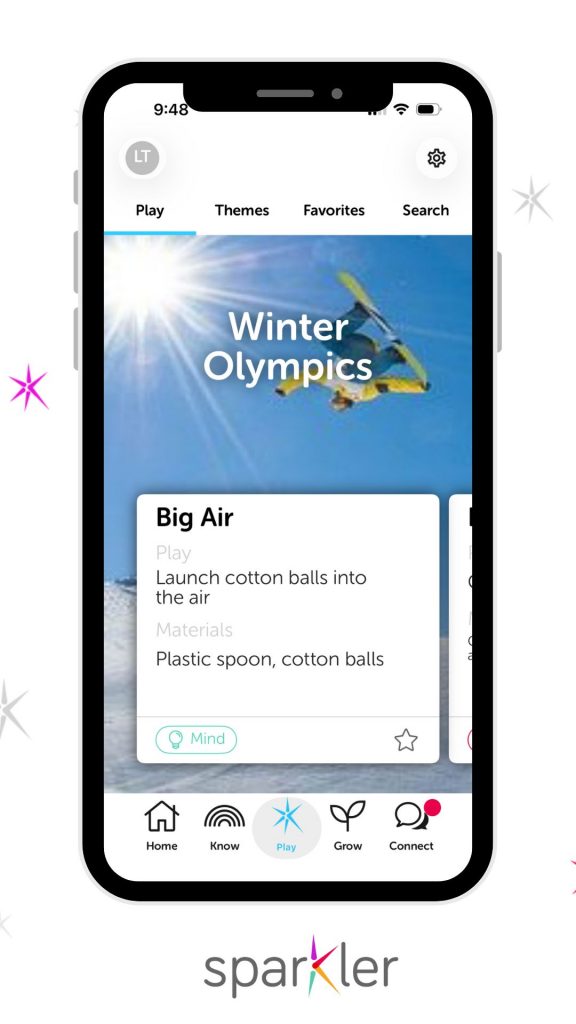
Find more Winter Olympics play activities in  your Sparkler mobile app! 

We are rooting for you, little athletes and scholars!